Showing posts with label work. Show all posts

Friday, December 20, 2024

#MerryStrikemas #strikeseason

Just a random sample of the worker activism bursting out all over this Friday before Christmas:

From the Starbucks baristas: 

 
From Amazon Teamsters workers who know better than their Trumpist leader ...
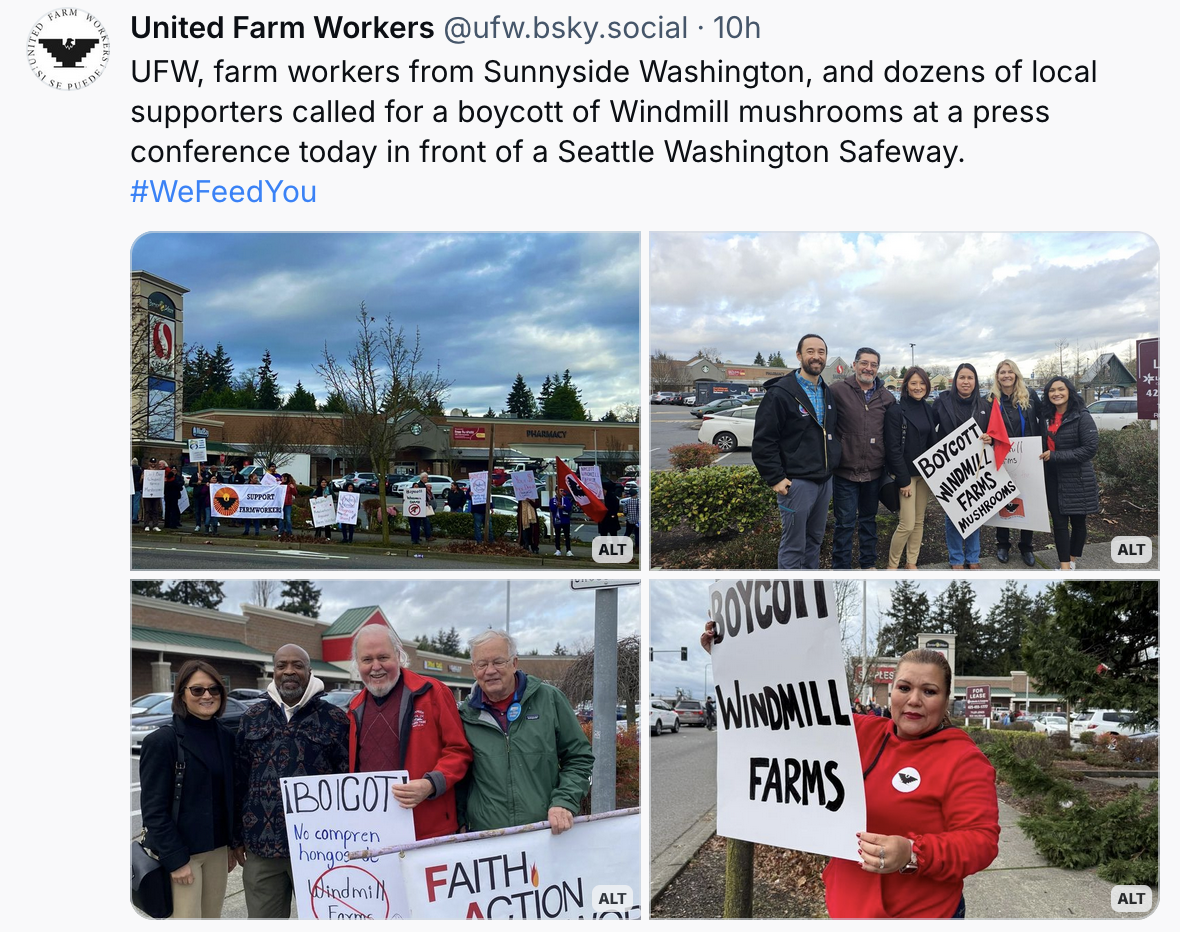
The UFW leads mushroom workers in Washington State; I remember a UFW mushroom strike in Gilroy.

Hospitality workers from UniteHERE march outside the Grand Hyatt Hotel in San Francisco:

A message for the season:

Saturday, August 17, 2024

Remembrances of youth jobs

She worked at Mickey D's. Harris's campaign wants the world to know it. This ad is running in battleground states, highlighting her middle class origins and affinities.

As the Washington Post reports:

One in 8 Americans have worked at McDonald’s at some point in their lives, according to the fast-food chain. McDonald’s announced that statistic last year when it introduced the 1 in 8 initiative, a campaign to celebrate its vast army of current and former workers. The company said it surveyed a representative sample of American adults and found that 13.7 percent of people said they had worked or currently work for the chain.

I never worked at McDonald's -- the fast food giant had barely launched nationwide in my youth. I remember vaguely when the Golden Arches appeared in suburban Williamsville. We tried it -- phew, dead burgers, not food. Dairy Queen was still better.

But kids and very young people did do marginal jobs before McD's. One of my oddest was delivering the New York Times daily to faculty and a few intellectually inclined (pretentious?) students at my high school. A bundle would be dropped at the school office, and I'd run the newspaper around to home rooms and student desks. I doubt anyone read it diligently, though I can say I glanced at it.

A little later, I worked as an answering service operator. Before phone service came with voice mail,  small businesses and busy people would pay to have their calls picked up by a live person who hand recorded their callers' messages. There was some cachet, a pretension of professionalism, in having an answering service instead of just letting calls go unanswered. Two-bit lawyers particularly thought having "a girl" on the line sounded upstanding. 

From the point of view of those of us answering for these lawyers, they were slimeballs. Most of the calls we took were from desperate clients who complained that the lawyer -- court-appointed I assumed -- never returned their calls. We couldn't do a thing for these callers. I didn't last long at that job, just held on through the Christmas bonus, then quit.

Like Kamala Harris, most of us have memories of jobs we were glad to escape -- if we did escape. I invite readers to comment on their youthful work experiences. Do these "opportunities" still exist? What were these jobs like? Did they make you proud to be a worker? or just make you miserable?

Monday, May 01, 2023

Happy May Day! Happy International Workers Day!

My neighbors at Arizmendi Bakery get the day off.

And so do many of my friends who are under contract with the union UniteHERE.

Enjoy. You earn it.

Sunday, January 08, 2023

Old people work, most everywhere

A long article in the New York Times this morning made it seem as the fact of old people working well into their 70s and beyond was a phenomenon of some East Asian cultures -- though one likely to be replicated in other developed societies as birth rates fell. Around the world, birth rates are falling fast, especially when women have more control over our bodies, resulting in less people of what has been considered prime working age.

And far too many old people don't have much of a social safety net to fall back on in many countries.

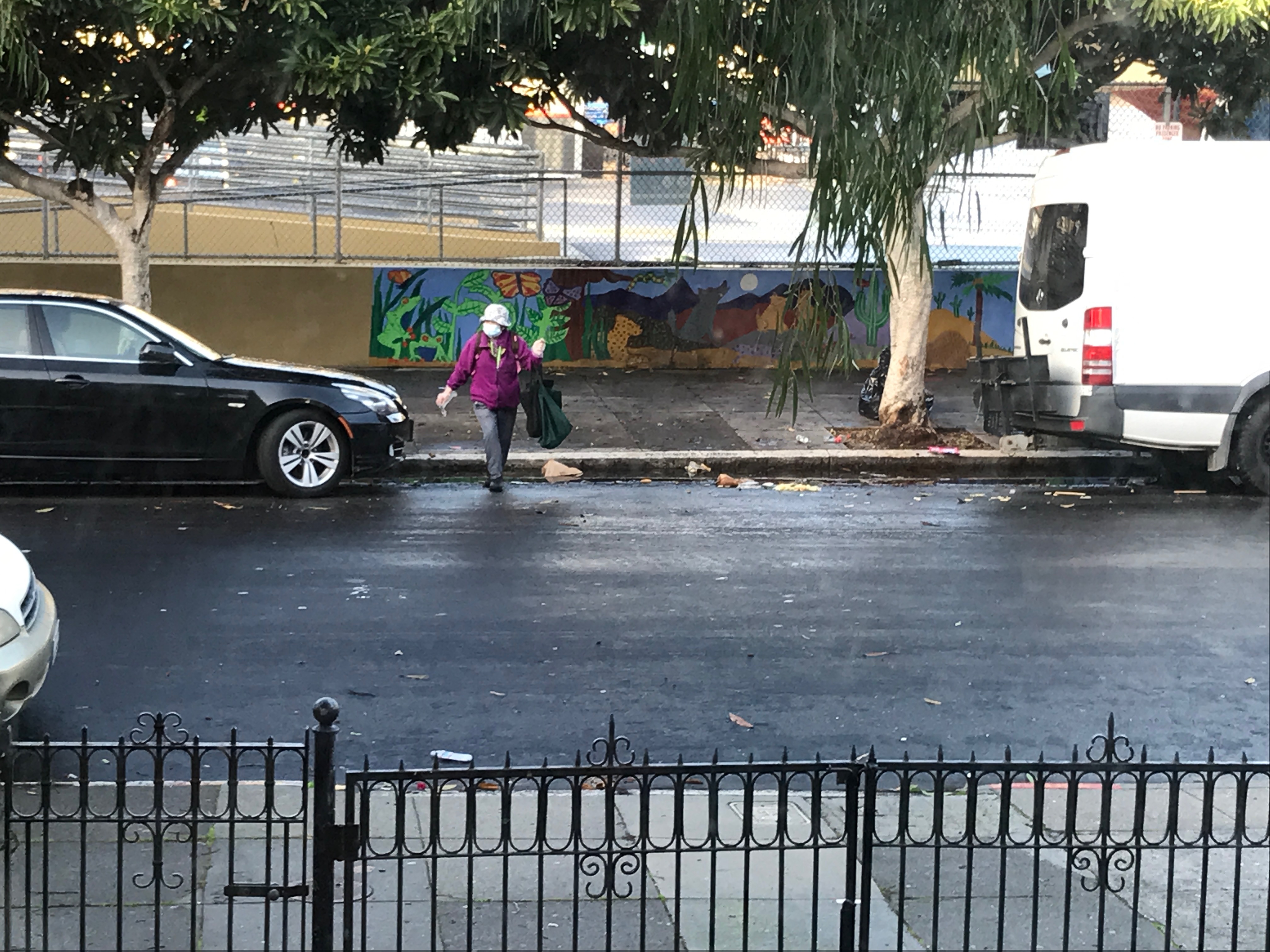
But please -- I can look out my front woman most days and see old people -- apparently immigrants, though I can't testify -- collecting bottles and cans to sell for recycling. Are they feeding themselves or doing their bit in families in which everyone of every age works? I don't know, though I like to guess the latter.

The notion that there is some society where most people are guaranteed a comfortable old age is a dream. Those of us who get to have one are damn lucky.

Wednesday, March 10, 2021

Working during the pandemic

Follow up on the topic of how people find dignity in work: I recommend Ann Larson's My Pandemic Year Behind the Checkout Counter very highly. Grocery clerks may be "essential," but they sure feel expendable and expended. Some excerpts:

... Vox advised readers to “pick up groceries at the curbside” instead of going into the store, as if the desired items just assemble themselves.

The Times reporter’s way of disappearing low-wage employees from a scenario that actually features them was even more striking. “Some stores,” she wrote, “sanitize the carts several times a day as part of their regular cleaning procedures.” This is correct. At my workplace, shopping carts are sanitized after each use. However, they are not sanitized by the “store,” but by people who are paid between $10 and $12 per hour to do so.  

... A good percentage of customers at my store know that my colleagues and I are doing a dangerous job that they are grateful not to have to do themselves. Some even take time to say thanks. But gratitude is not the same as solidarity. In fact, it may be its opposite. Gratitude allows a profoundly unequal situation to continue as long as its beneficiaries are nice about it.

... One customer even sniped at a bagger, an 80-year-old woman who was working my line. “Stop touching my groceries!” he yelled. When [the bagger] walked away in frustration, he turned to me and said, “We’re in the middle of a pandemic,” as if I needed to be reminded. I don’t think it would have helped to inform him that, before a customer purchases a grocery item, it has already been touched by multiple people, including those who work in my store between 10 p.m. and 6 a.m. unloading trucks and stocking shelves. For people like him, in that moment, the world is already divided up neatly and correctly into people who have to work at grocery stores and people who don’t.

Read it all.

Working for a living

Yves Smith has posted Erudite Partner's latest column, What Makes a "Good Job" Good? at Naked Capitalism, an influential financial news and information blog.


She adds an extensive and satisfyingly acerbic comment on the topic of work:

... don’t tell me you plan to become a subsistence farmer. Report back to me after you’ve killed and cleaned your own deer and are figuring out how to cook it. It’s very bloody business.

My gene pool on my father’s side for >10 generations until his grandparents was entirely Yankee farmers and fishermen. Living off the land or sea is hard work, as in “hard on your body” work. And even then, they used implements made by others: knives, butter churns, plows, tillers, anchors and rope, sails.

In other words, you have to go to lower than Little House on the Prairie standards of living to escape the modern paradigm of paid, specialized labor providing goods and services for use by others.

Similarly, a lot of what makes work valuable is not so much the task but having some measure of control over your tasks or pacing of your day, how well you are paid, and the amount of respect you are accorded. I grew up in a series of paper mill towns. The mill employees had status in their communities. They produced the paper for the stock and covers of major magazines like Time (they much later went to lighter grades of paper to save money); they could buy a house, support stay-at-home wives and kids, and regularly had a small “camp” house in the woods on a lake or owned a boat. Friends of mine from those days often went to college; one became a full professor, another went to Harvard on scholarship (I ran into her my freshman year).

Or think of being a receptionist, a role that has been disappeared at most firms. The ones I know even now take pride at being a face of their employer. They exchange pleasantries with visitors and sometimes have to make excuses as to why their host was running late. Or how about one of Lambert’s early jobs, of putting books back on shelves at his library, or my having a paper route? I enjoyed my delivery duties and wouldn’t mind doing something like that even now if I didn’t have to earn more to cover my expenses. ...

If you liked or were intrigued by Rebecca Gordon's essay, go read all of Smith's commentary.

Sunday, May 24, 2020

Grocery delivery: both less and more than just a job

Last week we ordered groceries from Costco, delivered by an Instacart "shopper." (I guess that label is better, more accurate, than calling a worker an "associate," but cloying euphemisms about people doing work under arrangements with lousy or no benefits still annoy me.) We've ordered several times since the lockdown. I figured out that I was suspicious of Instacart a couple of years ago, so I feel uneasy about this. I was lucky enough to have been raised in a moment in U.S. history -- the aftermath of the Great Depression and World War II -- when even middle class white people thought you did your dirty and dreary work for yourselves. But here we are and ordering groceries if we can afford to has become a public health practice.

So what kind of business is Instacart and the many analogous services? According to the Washington Post, these gig jobs are a booming business.
Instacart, founded in 2012, more than doubled its workforce in two months, thanks in part to Facebook ads with the coronavirus-sensitive slogan “Make money without passengers.” ... In interviews with 20 people who signed up for these jobs since the coronavirus crisis hit two months ago, workers said the barrier to entry was low, requiring little more than a background check, driver’s license and car insurance. But many found a steep learning curve in navigating company policies that shape pay and hours. Nearly all recruits said the availability of work and pay dropped off after a few weeks. ...

... Instacart’s algorithm organizes grocery orders into “batches,” which can include up to three different customers. Workers then select gigs from a Twitter-like feed, which shows earnings per batch in one lump sum, including tips.
So workers are essentially competing with each other, online, for what look like the best "batches." And then what is actually paid can change if some items turn out to be out-of-stock or if the customer changes the percentage of tip after the worker takes on their project. The default tip in the Instacart app is 5 percent of the cost of the groceries. Decent people bump it up; no tip is required from cheapskates. It's not clear what compensation "shoppers" receive beyond the tips -- varies by locality and their costs of doing the work such as gas. Maybe $10 to 15 an hour according to forums. There seems to be no promise of any particular wage from Instacart.

And then workers carry the inherent risk of encountering the coronavirus while in the stores or (less likely) at doors.

Some of Instacart's many new hires during the pandemic are happy with their role. Fox Business found an Instacart enthusiast to interview.
Sarah Hlad has been an Instacart shopper since early April, and already she’s earned almost $3,000.

“The first week I did it, I paid off my whole credit card,” she told FOX Business.

... On an average day, Hlad said she makes between $100 and $120, doing about three to four batches a day.
Ms. Hlad seems to be single, without dependents -- and seems to be doing the gig as a temporary fill-in until the pandemic threat wanes. This might not look so good to workers driven by greater needs.

For some "shoppers," the promise of delivering groceries has turned sour. According to CNET, part of how Instacart has been attracting hundreds of thousands of new workers is by promising sick pay if they catch COVID. But it seems the company seldom -- or maybe never -- honors that promise.
Like hundreds of thousands of other people across the country, Rachel worried she'd contracted COVID-19, the disease caused by the coronavirus. Her doctor recommended a test for the respiratory illness and told her to quarantine as she waited for the results, which could take a couple of weeks. Unable to work, Rachel sent Instacart a letter from her doctor. She asked for the sick pay that the company said it was offering workers during the pandemic.

"We carefully reviewed the documentation and, unfortunately, we were unable to confirm this claim at this time," Instacart responded 14 days later in an email seen by CNET.  To get approved, the company said Rachel would have to provide either a positive COVID-19 test or get a "mandatory quarantine order by [a] public health agency." A doctor's letter wasn't enough.

Dozens of other Instacart shoppers say they've also had doctor's notes turned down and were told to get a letter from a public health agency, according to advocacy group Gig Workers Collective. They say Instacart's sick leave policy creates a catch-22 because it's nearly impossible to get that documentation. Of the group's 17,000 members who are Instacart shoppers, only one is known to have gotten paid leave.

"Apart from that particular shopper, I don't know of a single other person," said Vanessa Bain, an organizer for Gig Workers Collective. "It's literally designed to keep people from being able to access it."
Some benefit.

And yet -- and yet -- the explosion of gig work delivering groceries during the pandemic also has evoked for some who've taken it on that wonderful experience we all wish existed more often in whatever we do to bring in our necessary sustenance. They are proud and fulfilled to be doing something that seems needed and worthwhile. This lovely video (not about Instacart but one of its analogues) reminds us what "work" might be and can be. Take the time to view. This guy cares.
If only this proud emotion were not so often exploited to turn a profit for others whose motives are entirely to make money for themselves.

Tuesday, May 05, 2020

Close to home ... I try to grasp what the data means


Parts of the Mission neighborhood, my home, have just become one of the more thoroughly coronavirus-tested spots in the country. The full results aren't published yet, but UC San Francisco has summarized initial results from two days work to test a little over 4000 residents. The Chron has the story here. Mission Local has what I find the clearest account.

Of the people tested, 1.8 percent (73 individuals) showed the markers of a current infection with the virus; over half of those, 53 percent, had no symptoms of disease -- and very likely didn't know they had it and might be spreading it. Ninety-five percent of those with the infection were Latinx, though Latinx people were only 44 percent of the tested population. No whites or Blacks tested positive though these groups together amounted to 40 percent of the sample. The remaining 5 percent of positive cases are called "Asian" -- perhaps Filipinos?

Starkly, seventy-five percent of those currently infected were male.

It seems pretty clear: at present in San Francisco, those getting COVID-19 are men going out of necessity every day to earn a living. The Mission has many old multi-flat buildings within which rooms are rented out to single laborers, sometimes several guys jammed together. These rooms come with padlocks for each door and shared bathrooms, minimal kitchen facilities. These facilities are just a small step above living on the street; they house people who do the dirtiest work of the city. And these folks are getting infected.

What about families? Are less women currently infected because they've been needed to stop work outside the home to care for children no longer in school, leaving the bread-winning to the men? I don't know.

At the moment, San Francisco seems a largely safe harbor from the virus if you don't have to go out to encounter significant numbers of other residents every day.

There's so much we don't know yet about the patterns of life that underlie the infection data. We may learn more later this month when the information derived from blood taken in the testing has been analyzed. Maybe even more significant numbers of Mission residents will show antibodies that reveal they were infected six weeks ago and have passed through and out of the infection storm. Not terribly likely, but possible. That's what shelter-in-place is all about.

And someday, soon-ish, more people will start going out again. We aren't going to stay away from each other forever. We just won't. Trump's protesting goons are fools tempting Darwinian retribution, but a broader community life will resume. And then there will be more opportunities for everyone who emerges from sheltering to encounter the virus. In history, societies have restored themselves after plagues when most people had developed some immunity the hard way. I sure hope we get a vaccine, and soon. But it is sinking in that this is just one phase and we have a long way, and very likely a lot more sickness, to go.

Tuesday, March 31, 2020

The hazard that comes with our best choices

Erudite Partner's latest syndicated TomDispatch article asks Is the Pandemic Patriarchal?

Because our society routinely disadvantages women, the novel virus and the social distancing with which we have responded only have made more difficult the lives of many, or even most, women. It's not just being cooped up the house with increased childcare responsibilities. Men seem to be more vulnerable to catching the disease, but because of how families and societies are organized, women face ongoing, escalating threats. E.P. spells it out.

Saturday, August 31, 2019

Some workers for Labor Day

These days, the whole of San Francisco feels like a construction job site. No recession here, yet.
Much of this is at superhuman scale.

With increased traffic, overburdened streets need all the help they can get.

In the residential neighborhoods, there's plenty of sprucing up going on.

Many a residential foundation needs replacing which can be a pretty drastic enterprise. This is what I used to do in the 1980s; as I realized while chatting with a new acquaintance recently, homeowners end up with a ton of concrete, perhaps some reassurance about earthquakes, and nothing to show off to their friends.

Better reinforce that roof.

With all this activity, how could Amazon deliveries be far behind?

Meanwhile, some has got to guard the store, lackadaisically.

All photos taken while Walking San Francisco in 2019. Women remain sadly rare in these jobs ...

UPDATE: Here's a woman worker I encountered while walking today:

I'm taking a short break. Blogging will resume after Labor Day.

Monday, September 03, 2018

Some photos of working San Franciscans for Labor Day

When you snap photos while exploring precincts, naturally you are going to encounter lots of people with outdoor jobs.

And for all our affluence, there is still plenty of work that takes place outside.

She makes sure that hydrants are tested.

With all sorts of turnover in neighborhood retail districts, this sight is common.

A woman slinging earth is not such a common sight -- but hey, I used to do that, so why shouldn't she?

It's nice to see that some of our new crop of indoor workers understand the disruption they are part of here in the city by the bay.

He appears to have done his time and is wandering home, satisfied.

Monday, April 17, 2017

Pondering shopping, and jobs, and the future of work

This is what a close-to-full-employment economy looks like. Apparently my chain grocery needs workers. Being naturally suspicious, I had to wonder whether "flexible" schedules mean all those attractive benefits somehow don't really extend to many new hires? A website where ex-employees write reviews suggests that part-time jobs at Safeway can work well for students and that the quality of the employee experience depends a lot on whether your particular location has smart store level management.

It's not at all clear that working at Safeway would enable someone to live here. In San Francisco, the current minimum wage is $13/hour, going up to $14 on July 1. For the state of California, the current minimum is $10.50. I suspect the grocery chain pays at least slightly above these levels for new hires. These aren't "living wages," exactly. According to an MIT Living Wage Calculator, a single adult working full time while living here would need to make $16.13 to enjoy a "normal" standard of living. Since the calculator assumes a minimum wage lower than the actual legal minimum, this seems suspiciously low.
***
Meanwhile, the Business section of the NY Times points to big, negative changes ahead in a sector which has been creating a lot of jobs.

Between 2010 and 2014, e-commerce grew by an average of $30 billion annually. Over the past three years, average annual growth has increased to $40 billion.

“That is the tipping point, right there,” said Barbara Denham, a senior economist at Reis, a real estate data and analytics firm. “It’s like the Doppler effect. The change is coming at you so fast, it feels like it is accelerating.”

This transformation is hollowing out suburban shopping malls, bankrupting longtime brands and leading to staggering job losses.

More workers in general merchandise stores have been laid off since October, about 89,000 Americans. That is more than all of the people employed in the United States coal industry, which President Trump championed during the campaign as a prime example of the workers who have been left behind in the economic recovery.

The job losses in retail could have unexpected social and political consequences, as huge numbers of low-wage retail employees become economically unhinged, just as manufacturing workers did in recent decades. About one out of every 10 Americans works in retail.

Whew! My emphasis.
***
You might think all this online shopping we're doing and consequent deliveries would be terrible for carbon pollution -- but Grist suggests that need not be the case.
Most anything beats driving when it comes to reducing the quantity of CO2 we personally are responsible for ...

Wednesday, November 18, 2015

Working day and night but without work

What if a "reform" made the life of 1.5 million U.S. households with approximately 3 million children dramatically more challenging -- and scarcely anyone but the unfortunates themselves noticed? In $2.00 a Day: Living on Almost Nothing in America that's what social scientists Kathryn Edin and H. Luke Shaefer document, both vividly and convincingly. The "welfare reform" of 1996 has created a huge, largely invisible class of destitute families who struggle to get by in our cash economy with only the tiny sum that the World Bank uses as the marker of deepest global poverty.

Our intuition is not entirely accurate about who these families are:

... the experience of living below the $2-a-day threshold didn't discriminate by family type or race. While single mother families were most at risk of falling into a spell of extreme destitution, more than a third of the households in $2-a-day poverty were headed by a married couple. ... the rate of growth [in this extreme situation] was highest among African Americans and Hispanics. Nearly half of the $2-a-day poor were white.

Food stamps (SNAP) and a few housing subsidies help, but since around 2000, the number of these extremely poor people has increased 50 percent.

These researchers went looking for people in this category whose stories were representative in both small and large cities and in rural areas. They thought it might be hard to find suitable subjects; in fact it was relatively easy. The book delves deeply into the stories of eight families, their survival strategies, their ups and downs (instability is the name of the game when you are that poor), their delights, and their values.

There's no question the 1996 welfare reform has had an effect. Meant to wean poor mothers off "dependence" and get them into the labor force, there's no question that today to be in $2-a-day poverty is work. And paying work is what poor people now most want, but struggle to find and keep.

The "welfare reform" assumed a stable growing economy where everyone could get jobs and poor working people would be buoyed by the Earned Income Tax Credit (EITC) which raises the effective incomes of low wage workers. But the EITC does nothing for the officially unemployed. For a while in the late 1990s expansion, "reform" more or less "succeeded," at least for some, though many still cycled from crisis to crisis, in and out of wage employment. But when the economy stagnated and then crashed in the '00s, there turned out to be no safety net for many.

And the poor have internalized the values of the reformers. A single mom insisted that

... to be a good parent, she had to model the value of education in getting a job. For these single mothers, the idea of returning to welfare violated their views of what being a good parent required, adding a self-imposed stigma to the potent societal stigma that came with claiming benefits ...

As far as they know, "welfare" is something that "they don't give out no more." Even at the depths of the 2008 economic implosion, TANF (state-run cash assistance program) rolls didn't grow; the poor expect no help from the state.

Edin and Shaefer report the difficulties the low-wage work market throws up that prevent really poor people from getting and keeping jobs: lack of transportation, need for internet access, expensive housing, short shifts, unreliable schedules, and always racial discrimination against African Americans. This is all true for most low wage workers. But the people who fall the furthest often have additional obstacles to escaping from poverty:

... they've had their share of hard luck; they've made their share of bad moves; they have other personal liabilities (asthma, or the same name as a notorious ex-con, for example); and their kin pull them down as often as they lift them up. ...

To a large extent, chance determines who stays employed and scrapes by and who falls out of the job market.

So what do $2-a-day people do? Move in with family members, often no better off or exploitative. Sell their blood plasma. Collect scrap metal and recycling. Illegally self off their food stamps to buy clothes for kids. Learn the round of food pantries and clothing giveaways. Sell the use of their kids' Social Security numbers. Learn to get by with society's scraps, to reuse and do without. Go hungry. Dream. There are few people who work harder, but we call these people unemployed.

These authors believe that the "reform" which trashed the safety net became possible, even inevitable, because

any program so out of sync with American values was doomed to fail. [Cash assistance] created a class of outcasts forced to trade their sense of citizenship for relief. ...

Our approach to ending $2-a-day poverty is guided by three principles: (1) all deserve the opportunity to work [for money]; (2) parents should be able to raise their children in a place of their own; and (3) not every parent will be able to work, or work all the time, but parents' well-being, and the well-being of their children, should nonetheless be ensured.

Nice ideas, but count me skeptical. Rapid changes -- technological, cultural, racial, international -- and the fears they unleash, are making this a pretty nasty society these days. Too often, too many of us, wish we could wish the Others (Those People) away. Too often, too many of us, shut out awareness of others' pain. A viable safety net arises from the knowledge "we're all in this together." Too often, too many of us, think erroneously that we're on our own.

And the very poor have no choice but to keep working away to survive.

Friday, October 10, 2014

How to lose the people


Sometimes you might think that no one who makes decisions in the Obama administration ever worked a day in their lives.

Two examples:
  • With considerable fanfare, the Prez announced in 2011 that home care workers would finally be included under the country's minimum wage laws, becoming entitled to higher pay and overtime. For forty years, these people (mostly women; often immigrants and/or of color) who take care of the sick and elderly in their homes had been treated as not-quite-genuine workers, so not deserving of elementary protections. The Department of Labor even wrote regulations. But in this election season, the bureaucracy announced it won't be enforcing the new rules in 2015. What good is that to people who work for so little return that they and their families end up on food stamps and Medicaid?
  • Even more outrageously, the administration has weighed in against workers who are seeking to be paid for time they spend waiting around to be searched before leaving their employers' premises. Amazon workers claim this daily process can take up to 25 minutes. The legal arguments are labyrinthine, but the situation is simple and ought to obvious: if keeping your job means you must give the job your time, you should get paid for that time. The Supreme Court seems unfriendly to this obvious reality and the administration is no better.
Bloomberg View commentator Francis Wilkinson insightfully suggests that, regardless of how Democrats fare in the upcoming midterms, this is "a moment of triumph for the party."

The nation's key social evolutions -- civil rights, the women's movement, gay rights, a demographic revolution driven by historic waves of immigration -- all bear a Democratic brand. The party has been an agent of the change sought by women and minorities and a mediating force in the conflicts that evolving power relations inevitably engender.

This is a serious achievement in the face of gruesome history, lingering cross-resentments and a sizable, if steadily dwindling, population of whites who (consciously or not) perceive racial privilege as the natural order of heaven and earth.

True, I think. But insofar as the emerging majority becomes normalized, they will assert just demands for a fair share of the country's wealth. The one percent have been getting almost all the economic gains of the past 40 years. Can the Democrats represent their constituents in this struggle? It is not at all clear that the answer is "yes."

Sunday, March 09, 2014

Men working

The monthly employment report came out Friday. 175,000 jobs created (unless they adjust the numbers which they almost always do) and 6.7 percent unemployment. Not terrible, but not good.

Somehow, I don't think these men are counted as "working" by the statisticians.


This activity sure looks arduous to me.

Once upon a time, this might have been "work," according to an excerpt from The Leading Indicators: A Short History of the Numbers that Rule Our World.

Until the nineteenth century, the concept of unemployment was alien. Most people didn’t earn a wage; they did not have “jobs.” They farmed, or traded, or served, or fought. Some were artisans or blacksmiths or stevedores, but most worked the land to nurse food out of stubborn soil. Factories were small, with a few dozen workers. There were mines here and there, and, of course, servants. But there was no framework of employment versus unemployment, only of want versus plenty, hard work versus idleness, good times versus bad.

... In the United States, the birth of economic statistics was part of an overall movement toward social and political reform. The drive to create these statistics was fueled in part by a rising national suspicion that large companies, monopolies, railroads, and banks were reaping disproportionate rewards and thereby robbing the common man of his hard-earned gains. ...

That meaning is still implicit in the statistics that frame our lives.

Thursday, June 02, 2011

Two scholarly and feisty ladies recalled

the-bench.jpg
This is a very San Francisco story. Ever noticed this bench in an obscure corner of Golden Gate Park? Probably not. Either had I when I stumbled on it.

It memorializes Miss Fidelia Jewett and Miss Lillien J. Martin, respectable lady friends in San Francisco in the late 19th and early 20th centuries who, without the bench, we'd have forgotten.

They were quite a pair: one a public school teacher, the other a professor of psychology at Stanford when such posts were seldom available to women. In old age, they studied aging and proposed how we might live full lives to the end.

If I've piqued your interest, head on over to the elderblog and community at Time Goes By to read the stories I found about them there.

Thursday, September 16, 2010

Poor women get the shaft while Senate flails

extend-TANF-emergency.jpg
A friend laid it out for us last weekend: "There used to be programs where you could send them. But now -- nothing." She works with the down and out in San Francisco's Tenderloin, the sort of dense, relatively cheap, dope-infested and dangerous downtown slum that barely exists in newer and smaller cities. Think grit among apartment buildings dating from the late 19th and early 20th centuries.

Many of the people in those buildings are families -- women on their own with children, new immigrants with little English, African-Americans, the unlucky of all races.

Back when Bill Clinton was trying to make nice with a recalcitrant Republican Congress led by Newt Gingrich, both parties combined to "end welfare as we've known it." That is, they agreed they'd stop offering cash benefits to women with kids who couldn't work, setting a 5 year limit on how long women could get any help -- and giving the states the funds as block grants that they were supposed to use to help poor women get into the labor force. Women on welfare and their friends howled, but the plan -- called Temporary Assistance to Needy Families (TANF) -- sailed through in 1996. (Full disclosure -- I was employed in those years on campaigns to expose what Congress was doing to poor people.)

The horrors we anticipated didn't completely show up because, just as the cuts were taking effect, the economy got much stronger, some women were able to find jobs, and the rolls got smaller. "Success!" both parties crowed.

But those block grants to the states haven't grown; they are still set based on 1994 welfare costs to states and have lost 27 percent of their value. Moreover states are allowed to divert the federal grants to other uses, such as balancing their budgets. Stephanie Mencimer reports in Mother Jones that even before the Great Recession hit

the state of Georgia dropped nearly 90 percent of the women off its TANF rolls between 2004 and the end of 2007, even as unemployment soared by 30 percent, and then diverted millions of dollars in federal anti-poverty money to other parts of the state budget. Thanks to this, only 18 percent of all children in Georgia living below 50 percent of the poverty line -- that is, on less than $733 a month for a family of three -- were receiving TANF in 2008.

When welfare was a guaranteed federal program, the case rolls would have automatically increased in a recession like the present one, helping tide people over until the job market improved. But with the current rules and system of federal payments to the states, that isn't happening. In fact, according to a report from the Institute for Women's Policy Research, census data shows that TANF is horribly broken.

... despite the nearly 10 percent unemployment rate, almost 90 percent of poor women with children are struggling through the recession without any financial assistance. The numbers range from 60 percent of poor women not receiving aid in DC to fully 96 percent in Louisiana who aren't getting a dime.

The federal stimulus package passed in 2009 did help some people.

The TANF Emergency Fund (TEF) ... has given states over $1 billion to operate subsidized jobs programs that have proved successful on multiple fronts. The fund has been a “win-win-win,” helping unemployed families find work, businesses expand capacity in a difficult economic environment, and local economies cope with the recession. Without the fund, some 120,000 young people would not have had summer jobs and some 130,000 parents would not have had jobs to provide for their families’ basic needs; they would also have lost a valuable opportunity to build skills for the future.

But this program ends on September 30 unless Congress reauthorizes it. That's why Jobs with Justice, a coalition including labor unions and community organizing groups that work among and are the poor, rallied outside Senator Diane Feinstein's office this afternoon, urging reauthorization. As has been true of so many bills this Congress, the House has passed an extension but the Senate is stymied by Republicans' (and perhaps the usual Dems') refusal to allow a vote.

Meanwhile, as my friend the Tenderloin caseworker explained, "there's nothing left." Medical won't enroll the sick at least until the health reform kicks in; training programs are closing; non-profits are being shuttered. Lfe is going to even tougher if the TANF emergency program is allowed to expire. Annie Lowrey in the Washington Independent reports today that

.. Sen. Bob Casey (D-Pa.) held a hearing to urge the TEF’s reauthorization. ... Casey is looking for a vehicle for the funding, but the chances seem dim.

Dumping on poor people is so much easier than taxing Wall Street to pay for civilization ...

tiny-&-friend.jpg
The "welfareQUEENS" from Poor Magazine raised spirits at today's rally.

Wednesday, April 28, 2010

Banking accountability, people-style

1Wells-facade_sound_nurses.jpg
Lunch time in downtown San Francisco was more than usually congested yesterday. Unions, community and tenant organizations rallied on California Street outside the Wells Fargo Bank shareholders meeting. Both the Alameda and San Francisco Labor Councils were there. Purple t-shirts and jackets from SEIU mixed with nurses from the California Nurses Association in red ponchos and their "Queen Meg" blond wigs mocking the Republican candidate for governor. Grassroots agitators from Just Causa/Causa Justa and POWER also were out in force.

2cops-move-stage-coach-out-of-demo.jpg
There came a moment when the San Francisco Police Department felt it had to get a Wells Fargo stage coach off the street.

3hold-banks-accountable!.jpg
People do make demands. They know something very wrong has happened to the circumstances in which they (try to) work. They know some people somewhere just seem to get richer, while people they know are scared at best, out of jobs and homes at worst. This is serious stuff; not something to be put out of mind. They want something done about it. Someone ought to pay for doing this to them and their communities ...

Yes, this is a little unfocused. Organizers try to give those feelings meaning, turn them into a force, by holding events like these. Wells Fargo makes a good target: it played big in the subprime mortgage ponzi scheme that brought down the financial system -- and it still runs a payday lending business through its ATM network that can hit needy borrowers with interest up to 240 percent per year! Wells Fargo's business may be legal, but, like other big investment banks, it acts without any accountability for the health of the society that enables it to operate.

Does getting aggrieved people out in the streets do any good?

Little demonstrations like this -- probably 300, peaceful, well-behaved people shouting slogans and listening to short exhortations -- don't get press coverage these days. Teabaggers are novel, newsworthy, "talking dogs"; union members and poor people are an old, tired story. They'd probably have to throw a pie in a banker's face to attract media.

But attracting media is not the only reason organizers put on these events. For one thing, it is important for each constituency within this kind of group to see that there are others with the same concerns and frustrations. And it is good for each groups' leaders to work with the other members of the coalition.

There's a social aspect to these things. I saw people from several of the many local communities I relate to -- and so did most everyone else. That's not a small thing, in a society where many of us easily come to feel socially isolated.

And though this was all amiably choreographed today, it never hurts to remind our local representatives off in Washington that their folks do expect action on financial reform. Barbara (Boxer), Diane (Feinstein), and even lofty Nancy (Pelosi) will have a happier time with this crowd on their side. Reminding them what we expect of them doesn't hurt and just might help.

4keep_in_homes_modify_loans.jpg

Monday, October 12, 2009

This economist doesn't look dismal

Never thought I'd see a Nobel Prize in Economics winner who looked like this. Elinor Ostrom is the first woman to get one of these. Her work is about

creating rules for transactions around shared resources, or "commons," that make collective action rewarding (enough) for everyone involved.

And where she added a particularly new way of thinking to economics was to zero in on the economic transactions that take place in ad hoc organizations. Her work is part of a body of knowledge that underlies what people are looking for and considering as they design Gov 2.0 systems of participation and new models for democracy, which makes her of particular interest to those of us interested in thinking through a distributed view of the world.

techPresident

Contemporary technology can carry us in different directions. Our delighted adoption of the World Wide Web can be used to profile each of us and control us, if the powers-that-be choose -- as they apparently might. We all learn that the monitors of our internet behavior can deliver us "targeted" ads, whether we want them or not.

But the same technology might also facilitate wider participation by different people in new networks that create new forms of power. That's not a given, but it is a possibility. The non-geographical connections people form in online social networks are real. What they mean will be worked out by the choices folks make, probably in a pretty messy fashion.

Congratulations to Ms. Ostrom for contributing to wherever it is we're going.

Monday, May 25, 2009

Unlikely work


Foundation replacement job in progress.

Several people whose writings I respect pointed me to Matthew B. Crawford's New York Times Magazine article "The Case for Working With Your Hands."

I have to admit, I brought to it an edgy suspicion, hard acquired. For 15 years I worked construction, primarily small scale earthquake retrofitting. The work was difficult, dirty, often unpleasant, required brains and skill, and left tons of additional concrete under scores of San Francisco houses. Every once in a while, we got a break doing a kitchen remodel, a deck, or a fence. There was nothing wrong with this way of earning a living, but there was nothing romantic about it either. I stopped when my body got tired and I discovered that the skills involved in bringing construction projects in on budget and on time were useful in many other, cleaner, arenas of work.

Like me, Crawford is person with a fine education who found satisfaction and perhaps some unexpected insight by working at a manual trade -- his is classic motorcycle repair. His core message:

A good job requires a field of action where you can put your best capacities to work and see an effect in the world. Academic credentials do not guarantee this. ...

Yes -- that's true. But I wish he'd shown some recognition how gendered that perspective is. Women who opt out of the education path to employment have many less options -- they are a lot more likely to end up emptying bedpans than acquiring a skilled trade. Yes, I was an exception, but I know how lucky I was in a particular place at a particular moment.

Just recently a battered pickup truck stopped next to me as I walked down the street and out jumped a woman, her face lined and a hair turning gray. She'd recognized me as the woman who hired her 25 years ago and given her a start in the remodeling trade she still carries on. Yes, she told me, she is still one of the few at the lumberyard and in the supply stores. And it is still a world where she can't count on being accepted for the professional she is.

Yet Crawford is onto a truth: work we experience as having meaning is food for the soul. His essay is very much worth reading. He quoted Marge Piercy's poem "To Be of Use." I will too:

The work of the world is common as mud.
Botched, it smears the hands, crumbles to dust.
But the thing worth doing well done
has a shape that satisfies, clean and evident.

***
Not long after reading Crawford's essay, I came across another attempt to explain how an unlikely job can satisfy. The author is "Combat Queer" who writes "A metafictional journey though an enlisted transwomans' junk room of a mind." Here's her explanation of how she relates to her stint in the Army:

You know what fucking kills me? Some times I really like being in the Army. ...there's nothing like doing your job well, like winning the esteme [sic] of people who wouldn't otherwise be your friends because you're good at what you do. Out in the civilian world, I can do this job, and I can rock it out there (and one day I will), but right now, I just want to do my job here. I want to [g]o to the sandbox [Iraq], provide the support I'm trained to, come back, and then be done with the Army. If they kick me out before I do what I've been getting ready to do, well, that'll be damn lame. I can do my job, I need to do it, fuck, I love to do it.

And yeah, I'm a transsexual. It all fits together somehow.

There lurks in most of us, most of the time, a hope to know we are "of use," and to be recognized for our usefulness by some community. I'm less sure than Crawford that it is work itself that gives this satisfaction; perhaps the satisfaction is both more idiosyncratic and more social than we readily understand.