Showing posts with label socialism. Show all posts

Saturday, May 07, 2022

De-industrialization all around

Part 2: Insights from There Is Nothing For You Here: Finding Opportunity in the Twenty-First Century by Fiona Hill; Part 1 here.
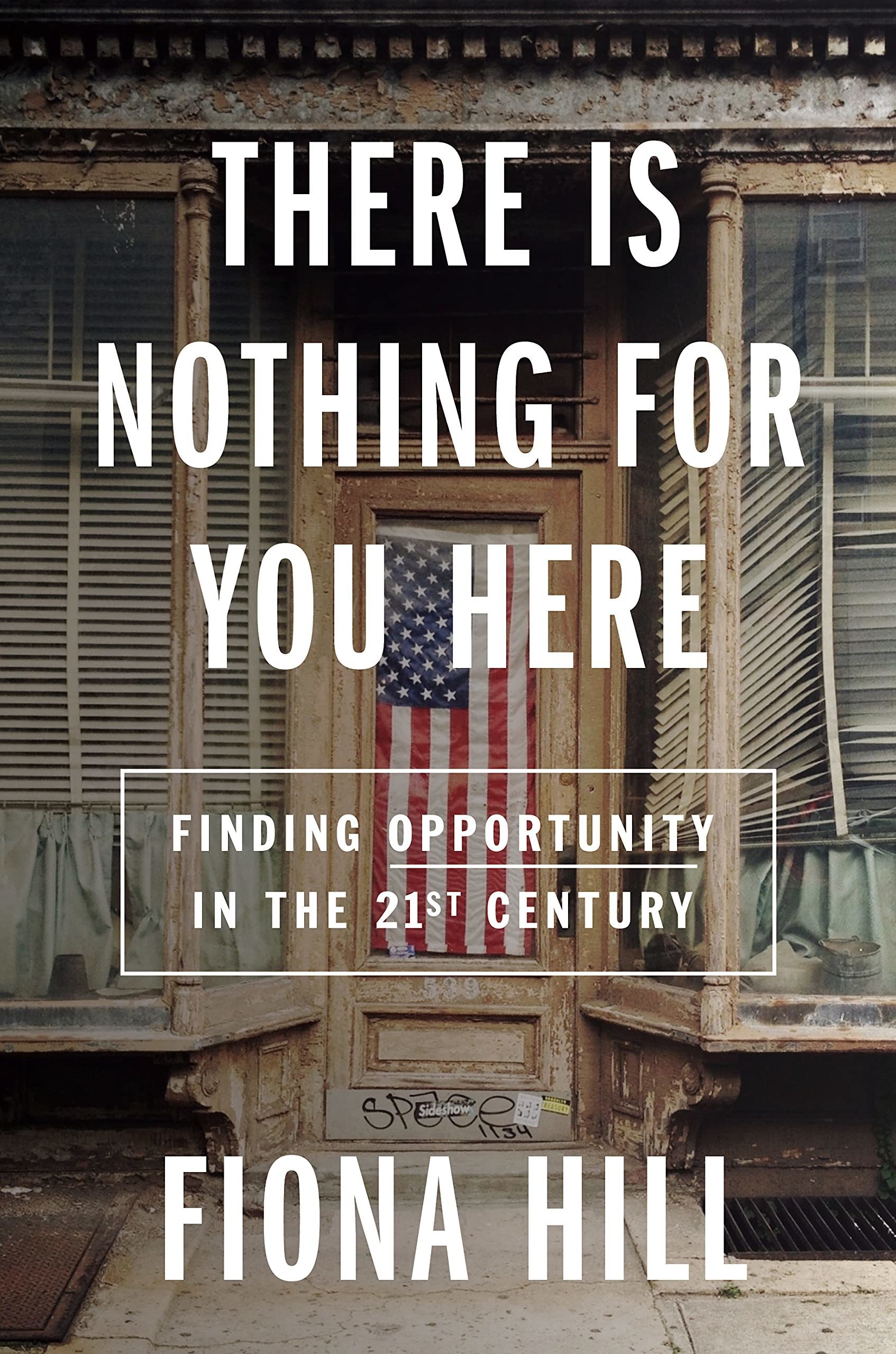
The second theme of this fascinating book that I want to highlight is that the people who built the industrial economy and modern world have been screwed similarly in the U.K., the U.S.S.R., and the U.S. by subsequent economic developments. They are all left-behind people.

Fiona Hill comes from Bishop Auckland, County Durham, in the North East of England. The early industrial revolution was based on coal and the labor of the miners who dug it; her hometown was where much of the coal which powered British commerce and military might came from when the empire ruled much of the globe during the 19th century.

But by the time Hill was born in 1965, English coal country was an economic disaster area. She writes:

In the 1980s, during the period when Margaret Thatcher was Britain’s prime minister, we were the pioneers for a unique form of social and economic malaise — a decline from the heyday of the industrial era that would come to define the entire developed world. The local mines closed,  along with associated manufacturing industries. Businesses were shuttered, communities gutted. Family and friends lost their way of life. Bishop Auckland, my once-prosperous hometown, was a forgotten place.
When she came to the United States in 1989 to pursue her professional fortune, she found her parents' coal town had all too many analogues in this country.
In the decades after I arrived in the United States, the fate of my home area in the United Kingdom was that of every major mining community in the Appalachia region, stretching from Mississippi, Alabama, and Georgia in the south up to West Virginia, Ohio, and Pennsylvania in the north. America’s coal country too lost the mainstay of its economy and opportunity.
She had struggled for educational and career opportunities and had the good fortune to find a niche as an expert on Russia. Russian forced-march industrialization was the wonder of the inter-European-war world in the 1930s. But by the time the Soviet Union collapsed in 1989, she recognized familiar situations. Post-industrial misery was
... also emblematic of industrial regions across Russia and the former Soviet Union, and indeed in other parts of Europe. This fact was a significant revelation once I moved beyond the narrow confines of the blighted world that I was from and finally began to understand the forces shaping our lives in the twentieth century.
She points out a pattern replicated out across different countries and economic systems.
Structurally, the United Kingdom and the United States — like Russia and other advanced economies — cycled through a rapid buildup of extractive industry and mass manufacturing in the 1920s and 1930s and again at the end of the Second World War. Our nations began the descent into what became known as the postindustrial era in the 1960s, and especially after the 1970s, when they were hit by successive oil shocks.
... The 1980s were the critical turning point. Margaret Thatcher and Ronald Reagan helped to drive the nail into the coffin of twentieth-century industry while ensuring that those trapped inside the casket would find it practically impossible to pry the lid off. 
... at the end of the 1980s, the Rust Belt was far more like the Soviet Union and the North East of England than most Americans realized. The United States’ big industries had also developed under a fixed set of technological and economic conditions. They were huge enterprises, centers of mass production, purpose-built for a specific time and place in the first half of the twentieth century. They had been built close to major sources of raw materials, energy, and transportation routes, such as shipping routes across the Great Lakes or down major rivers to the ocean. They had enormous sunken and fixed costs. The enterprises had drawn in hundreds, sometimes thousands of workers, often with central state and local government intervention and direction. 
... [These U.S. towns] were in essence the same kind of big company or mono-industry towns as Dnipropetrovsk (now in Ukraine), Stalingrad (now Volgograd), and Magnitogorsk in the USSR. Regardless of the particular circumstances of their individual creation, they were now outmoded and depleted, their big industries shrinking as they modernized and became automated. 
... Mass industries built the cities, not the other way around. When the industries closed, the place-based economies and societies crumpled in on themselves. ...  It was the same in the U.S., the UK, and the USSR. When the mine or the factory closed, there was no work, nothing to do, and nowhere to go. Thriving industry-built cities became shattered ghost town.
Having grown up in Buffalo in the decades when that city was losing its automotive and steel industries, I find it easy to visualize the economic devastation. (Like Hill, I got out ASAP; apologies to Buffalonians who are still today trying to dig the place out of its doldrums.) What I find novel is Hill's documentation that Soviet heavy industrial cities were experiencing something so similar. Using up and throwing away the land and people who do the work is simply the way of heavy industrial development, everywhere, whether under capitalism or "socialism."

Hill explains very clearly how the consequences of de-industrialization were particularly brutal for many workers of the Soviet Union. In the UK, Labour governments had won the National Health Service and some educational opportunity for working class students like Hill. Russians even under the decayed communism of the Brezhnev era, expected to have guaranteed jobs with social subsidies like housing, health care, and a pension. These weren't good lives, but they were lives. The violent imposition of kleptocratic capitalism in the 1990s was literally fatal to people who had once worked in heavy industries which could not be made profitable. Workers were out on their ears, took to drink, died young, and whole cities were depopulated. Sound familiar?

In Britain and the U.S., the people left behind by de-industrialization do still have the chance to to express themselves in free elections. Winners in the contemporary economy may find their choices incomprehensible, but Hill doesn't. Trump's rise made sense to her.
Populists play in the gaps created by generational and demographic change, divergent economic circumstances, competing social and cultural identities, and along the seams of inequality. ... From my vantage point growing up in the industrial North East, it was easy to see Trump’s allure for American workers. ... On trips to visit my family, I heard plenty of complaints in Bishop Auckland, ... about the way local voters were taken for granted by Labour politicians who wanted a safe seat in Parliament to satisfy their own ambitions. In their view, the Labour Party had abandoned the working class. ... Similarly, in the United States, workers believed the Democratic Party had abandoned them .
Hill's clear-sighted understanding of the failures of UK and US governance didn't make her a Trump believer. She joined his National Security Council because she hoped to use her expertise about Russia to avert terrible choices by an ignorant buffoon. She was at the Women's March in DC when she got the call about the job. She's very much a Russia-hawk, but way too well-informed and realistic to be a contemporary Republican apparatchik, even if they'd have her back after her impeachment testimony. She's a patriotic immigrant U.S. citizen who knows we Americans are sometimes neither wise nor good.

And she has a prescription for bringing the places in the first world where de-industrialization has destroyed individuals, families, and communities: more educational opportunity for children and adults. She has a detailed, thoughtful chapter on how community organizing and education might turn the left-behind places around, all drawn from her own experience. After all, education worked for her ... the girl from Bishop Auckland wasn't supposed to go anywhere and ended up testifying before the U.S. Congress ...

Part 1 about Hill's personal struggles is here.

Monday, May 02, 2022

May Day in the Mission

The small, enthusiastic crowd assembling at 24th Street to march to join the main festivities at Civic Center reminded me how much I love my neighborhood.

San Francisco's quite powerful established unions -- teachers, nurses, city employees, longshoremen -- were elsewhere. And more power to 'em. This crowd was made up of the sort of workers who for many years organized labor ignored: domestic workers, childcare workers, health aides, restaurant workers, undocumented casual laborers -- the service economy working class. 

Most were immigrants. Quite likely, they brought a broad vision of May Day with them from elsewhere: a May Day that takes up all the ills of their lives and propounds the general welfare as the duty of the state. The predominant language seemed to be Spanish, though the young man above was standing up for a Filipino political party.

 
The Mission has no truck with the immigration authorities.
 
They assume a decent society would provide health care accessible to all. 
 
Students want respect -- and debt cancellation. Isn't the job of a decent society educate its members?

There were even a few Zapatistas.

 
I was surprised by how nearly universal mask-wearing seemed to be in this crowd. I generally don't wear one outside, but pretty much everyone here did. So I did too. Perhaps these are people accustomed to having to wear masks at work or school? We have demanded this from "essential workers" for two long years.

I suspect this young drummer is going to remember marching on May Day fondly. 

A sprinkling of ideological leftists wandered the edges of the crowd, trying and failing to engage people with their newspapers. What would the Mission be without the last living Trotskyists?

Tuesday, June 01, 2021

A usable past for resisting market dependency

Freedom from the Market: America’s Fight to Liberate Itself from the Grip of the Invisible Hand by Mike Konczal (co-director of the Roosevelt Institute think-tank) aims to overthrow the account of our economic history that has ruled "mainstream" politics since the Reagan Administration. The way we have been enjoined to think is a lie; we are remembering our past falsely.
For two centuries, Americans have been fighting for freedom from the market. Their stories provide a powerful legacy to draw from and build upon. ... 
People have used markets for trading and exchange for centuries. What is unique today is how the economy has been restructured to extend and accelerate our reliance on markets into all aspects of society. ... The things we need to lead our lives are forced into markets where we are compelled to obtain them, at the mercy of private, profit-seeking actors and our own ability to pay. Many of our needs are left unmet or poorly provided for by the market -- from health care to retirement security to providing for children -- and more suffering is the result. ... 
This book argues that true freedom requires keeping us free from the market. In some places this will require the government to provide key services directly and universally, rather than requiring citizens to rely on the marketplace. These services include social insurance, education, and health care, among others. Elsewhere it will mean suppressing the extent of the market, such as the number of hours we work or the ability of businesses to discriminate against their customers. The form this takes will depend on the contingency of everything from technology to the aspect of our life in question. But in all cases, market dependency is a profound state of unfreedom, and freedom requires checks and hard boundaries on the ways markets exist in our society and in our lives.
Konczal makes a series of critiques of market dependency; what follows are are my opinionated, simplified summaries of his points:
• the market distributes necessary goods like health care and access to education unfairly -- and anti-socially
• the market doesn't provide incentives to businesses to produce what won't be profitable -- such as health insurance to sick and old people
• market dynamics allow businesses to structure employment for their convenience and profit, leaving workers only the "freedom" to take it or leave it
• market dependency means people are only valuable if we turn a profit for some entity -- other social goods can be ignored or rendered invisible
• market dependency can't survive without using the state to reinforce its power, so those who own the markets need to own the state.
The book consists of short chapters describing the history of struggles in this country about who got to own the lands being stolen from native peoples, who rules workers in workplaces, how the New Deal managed to provide a framework for collective social security within a still-ascendant white supremacy, how public daycare was invented for the World War II war effort and trashed afterward, the ongoing struggle for universal health care provision, and for public education for all. 

It is simply and clearly written. For a work of political and economic history and theory, it is delightfully approachable.

Konczal concludes:

... The story told here, about how freedom requires keeping us free from the market, is capable of short-circuiting [the Trumpian] far-right threat. A genuine movement to check the market through public action needs to be broad and welcoming, rather than walled off and for the few. Universal social insurance, free public programs, economic security, and power for workers are the things that ensure broad prosperity -- they succeed because they work. ... 
To succeed we need to harness and build on the proud legacy created by two hundred years of battles to carve out a free space beyond the confines of the market. Battles for the future of our country and society are not won on arguments about market failures, on the balance sheets of accountants, or on narrowly tailored, incremental solutions. They are won on arguments about freedom. ...
It strikes me that the folks making policy in the Biden administration are listening. The book is an easy, worthwhile read.

Tuesday, May 29, 2018

A very British socialist and a very British socialism

A few years ago, a British friend gave me a "What Would Clement Do?" T-shirt and complimented me that I was the only Yank she knew who might understand it. She was exaggerating my erudition; though I'd heard of British Labour Prime Minister Clement Attlee, I didn't know hardly a thing about him. And so, eventually, I picked up historian John Bew's exhaustive biography, Clement Attlee: The Man Who Made Modern Britain.

Bew advocates vigorously for the historic significance of his subject:

... it is difficult to think of another individual through whom one can better tell Britain's story form the high imperialism of Queen Victoria's Jubilee of 1887, through two world wars, the Great Depression, the nuclear age, and the cold war, and the transition from empire to commonwealth.

Born in the late 19th century into Britain's comfortable middle class, Attlee was on his way to a genteel conservative life via a second tier public (private) school, Oxford, and reading for the bar, when he took a detour into the London slums (Stepney, Limehouse) and emerged a convinced socialist. Amid the frothy political currents of the day, he took up with the pragmatic socialists -- as opposed to the airy intellectuals or dogmatic Marxists. These socialists eventually amalgamated with the trade unions to form the Labour Party. The Great War (1914-18) pulled Attlee into combat; amid the slaughter at Gallipoli and later in Iraq, he was lucky enough to suffer wounds which took him away while his units were decimated. He came out of the war a respected major, a leader of men, and returned to campaigning for socialism in London's East End. He was elected to Parliament in 1922 proclaiming:

"I stand for life against wealth ... I claim the right of every man, woman and child in the land to the best life that can be provided. Instead of the exploitation of the mass of the people in the interests of a small rich class, I demand the organization of the country in the interests of all as a cooperative commonwealth in which land and capital will be owned by the nation and used for the benefit of the country."

... [In those years] socialists may have remained deeply unsatisfied with the situation in post-war Britain, but the point that Attlee was making was that they no longer had any excuse for failing to participate. He threw down the gauntlet to those who believed they were 'above the rough and tumble of a local election', or above the need for compromise on politics. He condemned the "revolutionary idealist" who rejected democratic participation. This type of extremist would "criticise and condemn all methods of social advance that do not directly square with his formulae and will repeat his shibboleths without any attempt to work out their practical application."

The Great Depression of the 1930s with mass unemployment and near starvation among the working class tempted him toward a less 'democratic' radicalism envisioning implementing "socialism by decree" if Labour should ever gain power. But the rise of fascism in Europe changed his views:

the British Labour Party should define itself as standing for democracy over totalitarianism. Whether that totalitarianism was fascist or communist was essentially irrelevant.

It didn't help that he experienced the communists in East End London as violent thugs, all too similar to British fascist Oswald Mosley's followers.

In 1935, Attlee was elected leader of the parliamentary Labour Party. He was thought a weak choice, but had supporters in all factions. He had led his party to support full self-government for India and had lent his support to the fighters of the Spanish Republic, visiting soldiers in that civil war. The party now put forward what was seen as a "moderate" program:

A Labour government would nationalise the Bank of England, coal, electricity, cotton, and transport. Unemployment would be tackled and the means test for welfare would be abolished.

Meanwhile, the Conservative Party in government was appeasing Hitler abroad and failing to bring prosperity at home. As British resistance to the Nazi sweep across Europe crumbled in 1940, the old war horse Winston Churchill came in as Prime Minister and formed a government of national unity, bringing in Labour with Attlee as the party's leader. Bew speculates that for Churchill in that terrible moment,

... if turning Britain socialist was the price of victory, it was one he might be willing to pay.

Meanwhile, Attlee offered his understanding of what Labour's war aims ought to be:

"It would be an error to think changes are only needed in dictatorship countries, or after the war Western democracies can return to their rear positions unaffected..." [Labour was fighting not only against fascism but also] to make "the world safe for the ordinary man and woman of whatever creed or color," and for the "fundamental decencies of life."

Churchill and Attlee worked as successful wartime partners. Attlee's experience in the 1914 war had reinforced his gut level patriotism and given him a sense of the social mobilization required to win an existential national struggle. The Labour ministers were thought to have made essential contributions to war mobilization. And then -- dramatically -- in 1945 just as hostilities were being completed, the British electorate voted the Conservatives out of power and installed the Labour Party with Attlee as prime minister.

The residue of the war greatly assisted Labour in carrying out its program. The nation had become accustomed to a mix of disruption, solidarity and shared sacrifice. Wartime controls on finance and industry meant that it was possible with minimal disturbance to nationalize key economic sectors in accord with long stated aims. And Labour turned the aroused energy of the nation to creating the National Health Service (over the objections of many doctors) and building housing for the returning soldiers. Concurrently, independence finally came to India, signaling the end of empire though further decolonization took another decade and a half.

No British government of the twentieth century was as active, in terms of legislation passed, as the Attlee administration when it came to changing the relationship between state and society.

By 1951, Labour's leaders, largely men (very few women) who had carried the nation through the war against fascism, were quite simply tired. Voters returned the Conservatives to power in that year; Attlee remained party leader until 1955 -- a run of 20 long years at the highest level of British politics.

Obviously, Attlee's career played a huge role in shaping the Britain that endured at least until Margaret Thatcher's Conservative regime (1979-90) and in some ways until today, though its legacy of enlightened social policies is always under assault. He wasn't ever a heroic or larger than life leader like his contemporary Churchill; people tended to underestimate him, but he certainly helped bring change gracefully to a Britain losing its empire and its world position, all for the benefit of its people. Not bad.

One of John Bew's themes in this biography is how Attlee's socialism differed from pretty much all the other variants that thrived in the 20th century. He was not ideological in the common sense.

For Attlee, British socialism had a pre-history which long predated the theories of Karl Marx. [He looked to the writings of Romantic poets, to Percy Blythe Shelley, to John Ruskin, to Edward Morris .... but] ... aesthetic or idyllic socialism could take one only so far. The nation and the state could not be wished away; in fact Attlee came to think of them as positive instruments of change. [He was formed in part by the American Edward Bellamy's forward looking socialist vision ...] "the Golden Age lies before us and not behind us, and is not far away."

Improving conditions for workers, such as wages, working hours, insurance and healthcare, was the first battle the Labour movement should fight. .. while he believed that it was necessary to insert some science into socialism, there was a danger it would become too mechanical and systematized, and lose sight of the citizens it was supposed to liberate. "The besetting sin of the scientific type of social reformer is his failure to make allowance for the idiosyncrasies of the individual."

For an extended time, this British socialism worked for most citizens. Eventually a rapacious modern capitalism replaced it and Labour for a long time lost its moorings, whether in opposition or in government. As the current Conservative Prime Minister Theresa May stumbles through Brexit, Labour has regained much popularity -- can it again find a way to look ahead? "What WOULD Clement Do?"