Monday, May 16, 2011

Thinking differently about capitalism

They want us to think things couldn't be any other way. Our economy, our society, are just manifestations of the natural order, how (good) human beings organize themselves. If there are problems, they are at the edges.

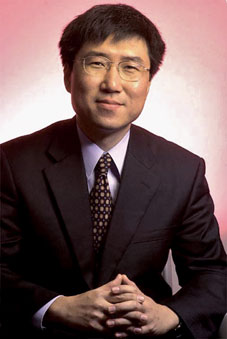
Ha-Joon Chang thinks there are other ways an economy and a society could work that Europe and the United States are failing to recognize. He's not some kind of hippie agitator. Raised in Korea, he has taught at the Faculty of Economics, University of Cambridge in the United Kingdom since 1990 and is the author of many academic articles and several books about how economic development happens.

In 23 Things They Don't Tell You About Capitalism, he cheerfully debunks many pillars of conventional Western economic wisdom. The book is short, pithy, easy to read and worth dipping into. It would make what I think of as a good "bathroom book" -- a volume best consumed in short chunks and mulled over, rather than read through at one sitting.

He begins by politely kicking over our defining economic myth:

Thing 1: There is no such thing as a free market.
...We accept the legitimacy of certain regulations so totally that we don't see them. More carefully examined, markets are revealed to be propped up by rules -- and many of them.

...Electoral votes, government jobs and legal decisions are not for sale, at least openly, in modern economies, although they were in most countries in the past. University places may not usually be sold, although in some nations money can buy them -- either through (illegally) paying the selectors or (legally) donating money to the university. Many countries ban trading in firearms or alcohol. Usually medicines have to be explicitly licensed by the government, upon the proof of their safety, before they can be marketed. All these regulations are potentially controversial -- just as the ban on selling human beings (the slave trade) was one and a half centuries ago. ...We see a regulation when we don't endorse the moral values behind it.

...Free-market economists may want you to believe that the correct boundaries of the market can be scientifically determined, but this is incorrect. If the boundaries of what you studying cannot be scientifically determined, what you are doing is not a science. ...

So, when free-market economists say that a certain regulation should not be introduced because it would restrict the 'freedom' of a certain market, they are merely expressing a political opinion that they reject the rights that are to be defended by the proposed law. Their ideological cloak is to pretend that their politics is not really political, but rather is an objective economic truth, while other people's politics is political. However, they're as politically motivated as their opponents. Breaking away from the illusion of market objectivity is the first step towards understanding capitalism.

Amen to that! Being more jaundiced than Chang, I'd simply propose that we always look at who benefits from a particular market-infringing law or regulation. Past winners are nearly always seeking to preclude anyone imagining novel alternatives -- and insurgents would do the same if we were in a position to do so.

Perhaps surprisingly for a thinker who reminds us to look for the political or profit motive that undergirds what we think are natural outcomes, Chang insists that free-market capitalism underestimates the power of non-economic motivations in human behavior.

Thing 5: Assume the worst about people and you get the worst.
Self-interest is a most powerful trait in most human beings. However, it's not our only drive. It is very often not even our primary motivation. Indeed, if the world were full of the self-seeking individuals found in economics textbooks, it would grind to a halt because we would be spending most of our time cheating, trying to catch the cheaters, and punishing the caught. The world works as it does only because people are not the totally self-seeking agents that free-market economics believes them to be. We need to design an economic system that, while acknowledging that people are often selfish, exploits other human motives to the full and gets the best out of people. The likelihood is that, if we assume the worst about people, we will get the worst out of them. ...

Morality is not an optical illusion. When people act in a non-selfish way -- be it not cheating their customers, working hard despite no one watching them, or resisting bribes as an underpaid public official -- many, if not all, of them do so because they genuinely believe that that is the right thing to do. Invisible rewards and sanctions mechanisms do matter, but they cannot explain all -- or, in my view, even the majority of -- non-selfish behaviors, if only for the simple reason that they would not exist if we were entirely selfish. Contrary to [former British Prime Minister Margaret] Thatcher's assertion that 'there is no such thing as society. There are individual men and women, and there are families,' human beings have never existed as atomistic selfish agents unbound by any society. We are born into societies with certain moral codes and are socialized into 'internalizing' those moral codes.

Economists are not supposed to point out the non-economic glue that holds societies together. To mention the obvious is to be unserious, perhaps less than properly "butch" -- not professionally dominant. But of course that moral glue is there. If our societies were really just nasty containers for Hobbesian wars of all against all, they'd have collapsed long ago. When times are tough, people routinely act beyond personal self-interest, narrowly conceived -- we rescue each other, share, lend a helping hand -- and society applauds these irrational actions.

Not every aspect of 23 Things will be comfortable to progressive Western readers. Chang points out -- accurately I think -- that the level of wages in a country is pretty much determined by immigration controls. If everyone could freely migrate where they'd get paid best, we'd all be stuck in a leveling process that would be radically downward for most people in what are now rich countries. (We are experiencing such a process when the work, instead of the people, migrates via international outsourcing.) This is not an argument for or against some level of legal migration, just something that needs to be understood.

Chang, no radical, thinks capitalism can be improved. He offers challenging conclusions.

To begin with: paraphrasing what Winston Churchill once said about democracy, let me restate my earlier position that capitalism is the worst economic system except for all the others. My criticism is of free-market capitalism, and not all kinds of capitalism. ...the market is an exceptionally effective mechanism for coordinating complex economic activities across numerous economic agents, but it is no more than that -- a mechanism, a machine. And like all machines, it needs careful regulation and steering.

There are different ways to organize capitalism. Free-market capitalism is only one of them -- and not a very good one at that. The last three decades have shown that, contrary to the claims of its proponents, it slows down the economy, increases inequality and insecurity, and leads to more frequent (and sometimes massive) financial crashes.

...while acknowledging that we are not selfless angels, we should build a system that brings out the best, rather than worst, in people. Free-market ideology is built on the belief that people won't do anything 'good' unless they are paid for it or punished for not doing it. This belief is then applied asymmetrically and reconceived as the view that rich people need to be motivated to work by further riches, while poor people must fear poverty for their motivation.

...Organizations -- be they corporations or government departments -- should be designed to reward trust, solidarity, honesty and cooperation among their members. The financial system needs to be reformed to reduce the influence of short-term shareholders so that companies can afford to pursue goals other than short-term profit maximization. We should better reward behavior with public benefits (e.g., reducing energy consumption, investment in training), not simply through government subsidies but also by bestowing it with a higher social status. This is not just a moral argument. It is also an appeal to enlightened self-interest. By letting short-term self-interest rule everything we risk destroying the entire system, which serves no one's interest in the long run.

Sunday, May 15, 2011

Misleading advertising or something much worse?

Have you ever looked at test questions the U.S. Citizenship and Immigration Services (USCIS) uses in interviews with aspiring citizens? This isn't easy stuff. They ask new citizens to learn a lot. I doubt most U.S.-educated high school grads would do very well on this test.

While looking for something else, I recently ran across a website that purports to offer a "Free Online Practice System for United States of America Citizenship Test." Ever curious, I thought I'd give it a try. It throws up 5 multiple choice questions and grades your answers. Here's one result from my first set:

citizenship-test-1.jpg

That was interesting I thought. I'm enough of a student of history so I could certainly make a case for "economic reasons." I could even, maybe, make a case for "election freedom," based on some of the overheated passions that accompanied voting in the 1860 Presidential election, especially in the states located between far South and farther North. But I did think that an election whose subtext was an argument over continuation of human slavery might have something to do with "human rights." Apparently not on this site's version of the test.

Curious, I tried another round of questions:
citizenship-test-2.jpg

Since I was now on to the test's biases, I had no trouble with this one. But unless you were brought up in the states of the Old Confederacy about 40 years ago, you probably think the war in question had a more familiar name. Don't you? I thought so.

The biases demonstrated by this test prep site are not present in the list of official answers provided by the USCIS to examiners. The test prep site answers are not "wrong" -- but they sure aren't the most common answers expected. Here are the relevant real acceptable answers:

3real-citizenship-test-answers.jpg
I'd like to think new citizens aren't being tutored in regressive history. We have enough regressive present.

Ethical and religious conundrums

Polling is a bit of a "garbage in; garbage out" business. If you ask people dumb questions, you are likely to get dumb -- or simply weird -- answers. Or so I suspect.


Case in point: a recent Public Religion Research Institute/Religion News Service Survey that asked people in the U.S. whether they "believe the Bible's admonition not to 'rejoice when your enemies fall' applies to how Americans should react to [Osama] bin Laden's death." About 60 percent of us agreed with this formulation. Interestingly, the group least likely to agree were white mainline Protestants. Perhaps we're not accustomed to turn to Proverbs for our everyday moral instruction?

"Minority" -- presumably that means non-white -- Christians of whatever denominational persuasion were the most likely to think there was something unseemly, unwise, or even wrong (motivations are not specified) with celebrating the death of an enemy. Some communities may have had too much experience on the wrong end of this sort of thing. A Native American friend concurs in this.

My favorite finding from this oddly designed poll was this:

Nearly half (49 percent) of the religiously unaffiliated agree that bin Laden will be eternally punished for his sins in Hell.

I have to wonder where these folks think they themselves are going beyond the grave?
***
A more challenging clash of perspectives on how to deal with evil in the world seems to have happened at a recent Newark Peace Education Summit. The big draw at this talkathon was the Dalai Lama. (I get that; I'd go a good ways to hear the gentleman.) Among the other speakers was Jodi Williams, also a Nobel Peace laureate, celebrated for her work to rid the world of land mines. His Highness urged attendees to seek inner peace in order to promote peace in the world. Williams on the other hand was "quite blunt:"

“It’s anger at injustice which fires many of us.”

Smart move on the part of the organizers to include both voices. I can't speak for anyone else, but I need both.

Saturday, May 14, 2011

Saturday scenes and scenery:
Messaging from behind

peace-love-equality.jpg
Nothing to argue with there, for most of us.

Organize!.jpg
Seems like the right idea.

proud-city-worker.jpg
In these days of attacks on the people who keep our cities going, this seems an important thing to be said, over and over.

san-fran-united.jpg
Education activists have the back of families.

greener-san-francisco.jpg
Tree planters work to leave a greener city to the kids ...

will-strike-if-provoked.jpg
And if all else fails, there's always this.

Friday, May 13, 2011

Immigrants for sale


Ever wondered who profits from laws that encourage locking up people who look to law enforcement as if they might be undocumented?

Oh, you thought this sort of thing was a cost to government (and you)? You're right. But some folks are getting rich off private prisons designed to sweep up brown people and suck in taxpayer money.

The private prison lobbyists are doing just fine too. Only the poor workers and ordinary taxpayers lose.

Georgia enacted one of these private prison support laws today, joining Arizona in racist reaction to a changing population.

Democratic party resurgence in the South?

hoy-marchamos.jpg

The other day I characterized President Obama's foray into immigration politics as a long game. I was making the point I make here frequently that the browning of the population means, if the Dems manage to continue to make themselves the more attractive option for Latinos and other immigrants, they should be able to win majorities for a generation or so. I suggested Arizona and Texas as obvious examples of states where this strategy can be pushed now with rewards in view in the not too distant future. On a hunch, I threw Georgia into the same category, thinking I was probably blowing a little smoke.

Maybe this wasn't so much smoke after all. Jamelle Bouie at The American Prospect has done real reporting on Georgia politics and he too sees glimpses of a Democratic future. White Democrats were pretty much wiped out at all levels of Georgia politics in 2010, but Democratic party chair, Mike Berlon told Bouie that

"Georgia had a pretty significant increase in the population, over 18 percent," he explains, pointing specifically to the decline in the number of whites and the increase in the number of Hispanics. Since 2000, Georgia's Latino population has grown by 96 percent to 854,000 people. At present, Latinos are more than 10 percent of the state's population. What's more, Georgia's African American population has grown by double digits, as millions of blacks have migrated from the North and back to the South; together, the two groups are responsible for the majority of Georgia's population growth over the last decade. The state's white population, by contrast, grew by just 8.6 percent.

What's happened in Georgia has happened all across the South. Every state in the region saw double-digit growth in its Hispanic population, and three states -- Mississippi, South Carolina, and Alabama -- saw their Latino populations grow by more than 100 percent. As Georgia Democratic consultant Tharon Johnson succinctly puts it, "In the next 10 to 12 years, maybe even 14 years, the Latino community will grow so significantly that it could actually surpass the white community. The smart thing for Democrats to do right now is to continue to reach out to the Latino and Hispanic community."

Bouie looks at the impediments to a black and brown-based Democratic resurgence and raises some sensible cautions. Southern whites shifted their allegiance to the Republicans not only to flee a party identified with civic and social equality for people of color, but also as they became more middle class in recent decades. Unfortunately, a tax-averse conservatism goes with new and uncertain middle class status, so their new position contains a potent motivation that is not about race -- or is added on top of racial motivations. Also, the new southern Latino population is largely composed of non-citizens, documented or not, so that community's influence in elections is not great, yet.

The experience here in California offers an additional qualification. The state that gave the nation Richard Nixon and Ronald Reagan (sorry about that) has become a complete Democratic bastion thanks to the racially-tinged efforts of Republicans to keep people of color down via racist measures in the 1990s. These days, in this state where no racial group is a majority, an electoral coalition of consisting of people of color and a minority of whites reliably gives all state offices to Democrats. But note: this coalition wouldn't work if some 40 percent of white voters hadn't stuck with the Dems. So the question arises in the states of the Old South: can Democrats win any such percentage of white voters? To my way of thinking, that's the challenge that differentiates Georgia from Southwestern states.

Chris Kromm at Facing South addresses the question of which Southern whites might stick with the Democrats. His article suggests the conclusion that Democrats' best hope among whites will be "hard pressed Dems" who think government has to level the playing field for individuals against big corporations. These are mostly women, while "disaffected" white men are more likely to feel "a pox on all politicians" -- and break Republican if they vote.

I think we can reliably project a move toward Democrats in Texas and Arizona (and reinforced Democratic strength in Colorado and Nevada.) But the core Old South may work out differently, even as it experiences the same demographic shifts.

Yet another blow for income inequality

The idea of raising the age for full Social Security benefits to something above 66 or 67 turns out to be one more way of transferring the society's goods to the better off at the expense of the less well off. The notion is popular among pundits and some pols -- no wonder, they stand an excellent chance of finding themselves among the winners!

life-expectancy-ss.jpg
This chart, from The Incidental Economist by way of Matt Yglesias, tells the story. Since 1977, better off male citizens have gained nearly 5 years of life expectancy after living to 65 (blue line). But if you were in the lower 50 percent of earners at 65, you hardly gained a year over the last two and half decades. So raising the Social Security eligibility age is simply a transfer from the poor to the rich from the program's accumulated trust fund.

The statistics sure don't make for a pretty picture of the nation's medical and occupational health system either. Why are life expectancies so skewed by past income? Might this have something to do with less affluent people experiencing intermittent periods without health insurance and a consequent inability to seek medical care? Might they have perhaps worked in more dangerous or less healthy conditions?

Oh well, they're worn out anyway -- no reason to keep 'em alive in old age ...

Thursday, May 12, 2011

Time for an end

Time-to-leave.jpg

Maybe if the people lead, our leaders will follow. As USA Today polling shows, nearly 6 in 10 of us have had it with the Afghanistan war.

"I kind of feel like Osama was a reason we had gone there in the first place," says Liz Calhoun, 35, a stay-at-home mom from Lakeville, Minn., who was called in one of two USA TODAY polls on the subject during the past 10 days. "Now that he's dead, it's an end."

"If this can be seen as a reason to end it, more power to it," says Jeff Yapuncich, 27, of Harrisonburg, Va. "I don't see any other way it's going to end."

...The demographic groups that gave Obama his strongest support in the 2008 presidential election now are the most supportive of bringing the troops home. That was the view of two-thirds or more of blacks, Hispanics, liberals, women under 50, those under 35, low-income Americans and unmarried people.

"It's time to get out," says Annette Lamb, 50, an Obama supporter and library science professor at Indiana University who lives in Teasdale, Utah. She calls bin Laden's death a convenient reason to justify a withdrawal that probably should take place for other reasons, too.

We seem to be out ahead of our leaders and certainly of our military. Naturally soldiers are going to be invested in finishing what they started. But since, aside from destroying al Qaeda, nobody has ever been able to say what this fight is for, it's hard to see what there is to finish.

President Obama has said he'll begin to bring troops out in July. There's no longer any reason the U.S. departure shouldn't be large and rapid. The Afghanistan war has no purpose. So bring the troops home now -- alive.

Wednesday, May 11, 2011

New Yorkers just want to get married


Enjoy. And read more about these delightful gentlemen here.

Whoever is running the Freedom to Marry campaign in New York State knows how to pull heart strings. It's hard to believe the state will resist much longer.

Warming Wednesdays: Seas rising fast

global-warming-arctic-melt-nasa.jpg
Arctic Sea Ice Concentration in Summer 2007 compared to 1979.NASA map. That yellow line is where the ice used to end -- and this was four years ago.

If greenhouse gases, the byproduct of many human activities, keep increasing in the atmosphere and trapping heat, we'll be living with a 3-5 foot rise in Arctic seas by the end of this century, according to a report from the multi-national Arctic Monitoring and Assessment Program.

“The observed changes in sea ice on the Arctic Ocean and in the mass of the Greenland Ice Sheet and Arctic ice caps and glaciers over the past ten years are dramatic and represent an obvious departure from the long-term patterns.”

A few of the key findings:
  • The past six years (2005–2010 have been the warmest period ever recorded in the Arctic
  • The largest and most permanent bodies of ice in the Arctic – multiyear sea ice, mountain glaciers, ice caps and the Greenland Ice Sheet – have all been declining faster since 2000 than they did in the previous decade.
  • Loss of ice and snow in the Arctic enhances climate warming by increasing absorption of the sun’s energy at the surface of the planet. It could also dramatically increase emissions of carbon dioxide and methane and change large-scale ocean currents. The combined outcome of these effects is not yet known.
Many links for more here.

If our species is smart, we'll obviously work to reduce our emissions of greenhouse gases. In climate change lingo, that's called "mitigation." But we've already set in motion processes we can't stop, even if we ceased burning coal and oil today. So we also have to be smart enough to begin planning and building for a different future -- that's called "adaptation." Might as well learn the jargon now; we're all going to have to hear a lot of it.

Despite every other legitimate concern, we cannot ignore that our economic and social system is rapidly making the planet less habitable. So I will be posting "Warming Wednesdays" -- reminders of an inconvenient truth.

Tuesday, May 10, 2011

A long game


Here's a hopeful snippet of political analysis.

This country is simply going to have to move forward with some, mostly sane, somewhat humane, immigration reform. Given our frequent outbreaks of fear of the foreigner and the (mostly) Republican politicians who exploit those fears, it's hard to see that happening. But Doug Harlan J at Balloon Juice envisions how we get there.

There’s no way on earth that any kind of major immigration reform will pass between now and November, 2012. Democrats should push the issue anyway, though, because (a) it’s a big political winner and (b) if Republicans take enough of a beating among Latino voters in 2012, they may change their tune and help pass something in the next Congress or the one after. ...

Now is a perfect time to try. Republicans will block it and they’ll pay a price at the polls for doing so. The only way to make progress on this issue right now is beat Republicans with it until they say uncle.

My emphasis.

I can make an additional suggestion. In 2012, the Democrats need to somehow find enough money and guts to invest in pushing Arizona, Texas and Georgia toward their column, engaging their growing Latino populations. It's probably too early in the country's ongoing demographic shift to swing those places over, but giving the Republicans a scare while hanging on to increasingly Latino Nevada and Colorado should put a fear into the saner ones.

Oh -- the President is talking immigration in Texas today ... looks like his political team makes the same calculation. He won't actually do anything about immigration -- in fact, enforcement of deportation policies under Obama has been more brutal than under Bush.

But if Latinos vote, Obama and most Democrats will win them. The other team is simply too obviously straight-up racist.

Lest peace break out ...

101st Meeting

On the one hand: U.S. foreign policy elites know that the national swoon over the killing of Osama bin Laden makes for a great chance to cut our losses in wars across the globe. So we get people like Leslie Gelb, President Emeritus of the Council on Foreign Relations, declaiming in the Wall Street Journal:

Afghanistan is no longer a war about vital American security interests. It is about the failure of America's political elites to face two plain facts: The al Qaeda terrorist threat is no longer centered in that ancient battleground, and the battle against the Taliban is mainly for Afghans themselves.

With Osama bin Laden now swimming with the fishes, the U.S. has but one sensible path: to draw down U.S. forces to 15,000-25,000 by the end of 2013, try cutting a deal with the Taliban, and refocus American power in the region on containment, deterrence and diplomacy.

That's not exactly what I (or probably the Afghans) would call peace, but it's moving in the right direction.

In the National Journal, Tim Fernholz and Jim Tankersley have spelled out in detail what the ill-conceived "war on terror" has cost, in money, deaths, and other paths not taken.

As we mark Osama bin Laden’s death, what’s striking is how much he cost our nation—and how little we’ve gained from our fight against him. By conservative estimates, bin Laden cost the United States at least $3 trillion over the past 15 years, counting the disruptions he wrought on the domestic economy, the wars and heightened security triggered by the terrorist attacks he engineered, and the direct efforts to hunt him down.

What do we have to show for that tab? Two wars that continue to occupy 150,000 troops and tie up a quarter of our defense budget; a bloated homeland-security apparatus that has at times pushed the bounds of civil liberty; soaring oil prices partially attributable to the global war on bin Laden’s terrorist network; and a chunk of our mounting national debt, which threatens to hobble the economy unless lawmakers compromise on an unprecedented deficit-reduction deal.

Read it all; it's worth taking in. The smarter defenders of American exceptionalism -- of empire -- are ready for a changed strategy.

On the other hand: the dumber defenders of empire in the Republican House of Representatives are making an effort to ensure the "war on terror" is permanent. They are afraid that the historical specificity of language in the Authorization for the Use of Military Force, adopted in the immediate aftermath of 9/11, might suggest a limit on Presidential authority to send troops chasing around the world. So, according to a summary in Politico,

The new language drops any reference to 9/11 and “affirms” a state of “armed conflict with al-Qaeda, the Taliban and associated forces.” The measure also explicitly gives the president the right to take prisoners “until the termination of hostilities” – something the courts have found to be implicit in the current version of the AUMF, though the new proposal could be seen to extend that power. ...

But critics say the Republican-sponsored measure amounts to the first full-scale declaration of war by the U.S. since World War II – at a moment when counter-terrorism efforts are succeeding, the U.S. is withdrawing from Iraq, and about to begin a withdrawal from Afghanistan. And, they say, it gives Obama and any successor carte blanche to attack any individual or any nation without further approval from Congress.

“The U.S. is trying to finish up and pull out of two wars right now [but] Congress is involved in declaring, for the first time in 70 years, worldwide war,” said Chris Anders, a legislative liaison for the American Civil Liberties Union.

In addition, Anders said, the legislation would result in “a huge transfer of authority from the Congressional Branch to the Executive Branch” that would give “ authority to this president and all future presidents to use military power, war power wherever a terrorism suspect resides.”

The article indicates the Obama administration has not taken a position on this legislation. We probably can't count on Democrats to reject this endless extension of an ill-defined "war" unless the administration uses its influence against it.

War and a society endlessly anxious about threats, real and imagined, remains popular among our rulers; among most of us, instinctively, not so much so.

Photo via US Army Flickr feed.

A people's budget

Mostly the whining coming out of Washington about budgets and the deficit is just cover for a partisan attempt to trash whatever safety net has so far survived thirty years of Reaganism. The very rich already have got hold of most of the country's wealth, but they are feeling deprived because they want it all.

In reality, this is still a rich country and we can pay our bills and take care of our people if our rulers will let us, despite our current trio (!) of dumb wars and habit of coddling failed financial speculators.

Progressive Congresscritters have introduced a "People's Budget" that shows how. Our rulers aren't going to give us anything so sensible unless or until we beat them into it, but progress starts with a picture of where we want to go. The People's Budget serves that function.

Don't take my word for it -- Nobel prize winning economist Paul Krugman agrees that this is how we need to be thinking.

... it increases revenue partly by imposing substantially higher taxes on the wealthy, which is popular everywhere except inside the Beltway. But it also calls for a rise in the Social Security cap, significantly raising taxes on around 6 percent of workers. And, by rescinding many of the Bush tax cuts, not just those affecting top incomes, it would modestly raise taxes even on middle-income families.

All of this, combined with spending cuts mostly focused on defense, is projected to yield a balanced budget by 2021. And the proposal achieves this without dismantling the legacy of the New Deal, which gave us Social Security, and the Great Society, which gave us Medicare and Medicaid.

Here's a 7 minute clip that explains all this from the Thom Hartmann show, pulled together by Ronni Bennett of Time Goes By.

Monday, May 09, 2011

Coming up, coming apart, now what for Black Americans?

Somewhat oddly, the Washington Post -- the man's employer -- labels Eugene Robinson an "opinion writer." The rest of his bio points out he's an experienced reporter as well as a columnist, with experience covering venues from city hall to Buenos Aires and London. His recent book Disintegration: The Splintering of Black America is very professional, if sometimes intimate journalism, a collection of reporting from which Robinson derives some potentially controversial conclusions.

Robinson writes that, "if we allow ourselves to notice" ...

instead of one black America, now there are four:

  • a Mainstream middle-class majority with a full ownership stake in American society
  • a large, Abandoned minority with less hope of escaping poverty and dysfunction than at any time since Reconstruction's crushing end
  • a small Transcendent elite with such enormous wealth, power, and influence that even white folks have to genuflect
and
  • two newly Emergent groups -- individuals of mixed-race heritage and communities of recent black immigrants -- that make us wonder what "black" is even supposed to mean.
The structure of the book is simple: several chapters on the black experience in this country, beginning with "When we were one" leading into "Parting of the ways" followed by sensitive descriptions of these four contemporary subsets of African-Americans.

It's not as if Robinson's central point -- that Black America is not a monolith -- isn't obvious to anyone who is looking around and willing to notice. But only someone who had never needed to feel that there was a community standing in solidarity with him -- say a comfortably-off, unimaginative, white man -- would suggest that there isn't something a bit daring about discussing the fissures in the African American community out in full view of all, including the community's detractors. As a white lesbian who has for years made a habit of pointing out cynically that the mark of a successful LGBT civil rights struggle is that individuals within the community win the freedom to assume the class position they would have occupied if they hadn't been stigmatized, I get that Robinson is being mildly transgressive here. When an ascribed identity has given you strength as well as made you vulnerable, you don't announce its "disintegration" lightly.

There's lots to like and to learn in this short volume:
  • Robinson's description of how black community came to be and worked to provide a relatively secure base for some African Americans before the civil rights revolution is going to become more and more vital to new generations who didn't come up in this world. If not articulated, this history gets lost.
  • Some of the most interesting important parts for me were the material about the "Mainstream." His discussion of the lives of successful, single black women as a large slice of that Mainstream describes several friends, but I've not seen their situation spelled out without prejudice before.
  • Perhaps because I've lived most of my life in California, I'd been unaware of the extent to which black-majority urban neighborhoods burned out in "rebellions" in the 1960s never came back up, remaining blighted, set up for later drug epidemics, and the violent misery that characterizes the lives of the subset of the African Americans Robinson names "Abandoned."
  • This is very much a book that draws on the experience of Washington, DC. It is rooted in the life of the District and its inhabitants, rather than the self-referential government and media cluster progressive bloggers call The Village. Black citizens have made lives in the capitol for generations. Unsurprisingly in this time of community fragmentation, this year's census finds that the District will soon cease to be a black-majority city for the first time since the 1940s. Many blacks have done just what whites used to do: move to the suburbs for better housing and schools. Meanwhile gentrifiers, mostly white, have known a good thing when they saw it and moved in.
  • Robinson brings forward a statistic from a Pew Social Trends Survey that is worth some pondering: nearly four in ten Black Americans say "that because of the diversity within their community, blacks can no longer be thought of as a single race." Immigration of people with African appearance but different histories from both Africa and the Caribbean, in addition to the growing group of multi-racial children with some African ancestry, has called historic U.S. understandings of "race" into profound question even among the population most impacted by "racial" categories.
Though Robinson's thesis is that a splintering has taken place, his most provocative suggestion is that it is time for Mainstream African Americans to show enough residual solidarity with the Abandoned (the "underclass") to be willing to forego affirmative action for their children. Their children no longer need help to succeed; poor African Americans (and some immigrants) should have preference for whatever hand up the society is still willing to offer. This is certain to seem premature to lots of people, especially since most proponents of substituting economic for racial and gender criteria within society's small attempts to increase social equality have been viscerally hostile to the African American community.

Disintegration is a quick, smart read. Nobody has to agree with all of it. Highly recommended.

Sunday, May 08, 2011

On beyond football


Now here is a fine wonder ... last week I noted that U.S. football might be in long term trouble. Today I see that a San Francisco Chronicle football writer is moving on to a new venture. It's not just that there is no future in local newspapers, though there probably isn't. David White has had it with some of the posturing and he has some parting commandments to offer:

Thou shalt not wear a cross around your neck if you're going to verbally wring the neck of third-string quarterbacks and local sports anchors in full public view. The Scripture says to take up your cross, not nail everyone else to one. Represent or tuck it in.

When thou tear an ACL, don't say it's because God lets everything happen for a reason. There is a reason. A 320-pound defensive tackle landed on the back of your knee.

Thou shalt not thank God when only you win, and never when you lose. What, is it his fault that 4th-and-inches call was a few yards off? Did he fumble away the game-winning interception? The Lord giveth, and the Lord taketh away.

Thou shalt absolutely not say your team won because it was God's plan. What does the Lord have against the other team? And why should God even care in a world of suffering how our games play out? Maybe you think He doubled down on your end of the Vegas line? He didn't.

White is moving on to be a pastor. Read the whole thing. Adios Mr. White.

Saturday, May 07, 2011

Saturday scenes and scenery: water birds

heron outa here!.jpg
This heron really didn't want to have its picture taken. I was a good 150 feet away when, sensing me, it took flight.

heron & shadow!.jpg
But I crept quietly along the edge of the small lake in Golden Gate Park, then settled in, hoping it would return. It did.

heron.jpg
Out by the ocean near Sutro Baths, this heron was much more inured to human attention.

gull.jpg
Meanwhile, amid the rocks, gulls fished, impervious to me and my camera.

Friday, May 06, 2011

Cancer: medicine, science and the flow of history

Don't read The Emperor of All Maladies: A Biography of Cancer the way I did, by ear. Dr. Siddhartha Mukherjee's Pulitzer Prize winning history is an impressive history, but the writing doesn't hold up well as an audiobook. It's a mess of overwrought and cliched metaphors, of big words where something simpler would do. For example, like too many authors recently, Mukherjee seems enthralled with "eponymous" -- an obscure adjective that adds little meaning but lots of phony erudition to the writing. Perhaps all this would be less disturbing in print.

But these quibbles aside there's a lot here. I come away from it, feeling I have some kind of outline of the evolution of medical and scientific understanding of cancer. And, like the author, I am drawn to events and people whose life paths I crossed who are part of this history.
***
I grew up in Buffalo, New York in the 1950s, when the Roswell Park Cancer Institute was a community ornament, the proof that Buffalo was a happening place. (False advertising that.) I remember vividly that the annoying younger sister of one of my playmates suddenly started wasting away. I think by the end, this once lively little girl weighed about 30 pounds. She was treated at Roswell Park and Children's Hospital. She died. Dr. Mukherjee's book makes me think she had a leukemia and probably was part of the trials of that era. Children with many common cancers don't die anymore.
***
As a political activist, I was impressed by the story of how political socialite Mary Lasker and Dr. Sidney Farber applied the techniques of advertising and social mobilization to create a groundswell of demand for funds for cancer research. This effort climaxed with President Richard Nixon declaring a "war on cancer" in 1971; like many of our wars on ill-understood enemies, this one has limped along, making perhaps fitful progress, but still festering inconclusively.
***
About the same time, a very private friend of mine suddenly disappeared from view. She was having some sort of trouble. I knew not to ask. Only years later did I learn that she'd been diagnosed with Hodgkins Disease -- and was one of the first cohort who benefitted from new treatments, attaining remission. A few years earlier, she would have died. None of this was shared with her circle. People didn't talk about cancer in those days. I never understood the shame attached to any disease, an attitude that served me well in later years living on the fringes of the AIDS epidemic in San Francisco.
***
One of the fragments from Mukherjee's history that sticks with me is science wise man Vannevar Bush's insisting in the post WWII era that progress is built out of the accumulated data banked by apparently purposeless basic research. There's a theory about how science develops underlying that assertion, a theory of incremental progress that seems confirmed by the way Mukherjee constructs his historical narrative. Yet at the same time, Mukherjee recounts science's discontinuous leaps, the occasions when observations over a century old that have fallen out of fashion or out of seeming salience prove out when someone happens to look at a problem differently. I experienced Thomas Kuhn's The Structure of Scientific Revolutions as one of my most important intellectual influences; Mukherjee seems to have melded Kuhn's insight into the discontinuity of understanding with his clinical experience of cancer medicine and his respectful historical research in a convincing whole.
***
Mukherjee concludes with evidence and hope that cancer is on the way to being understood and consequently more treatable. Genetic discoveries can pinpoint what's gone wrong in cancer-afflicted individual's genes. Increasingly this understanding enables creation of medicines that interrupt the disease's uncontrolled growth. But genetic understanding may also show a more efficient routes to prevention strategies. Instead of of having to observe large populations over long periods of time in epidemiological studies looking for exposure to possible carcinogens, scientists will be able to find out what agents cause mutations to particular human genes in a Petri dish. It's a stunning prospect.
***
Understanding can't come too soon. Meanwhile, The Emperor of All Maladies comes out in paperback in September.

This stream of consciousness discussion of a book is what happens when I know I can't wait to write for the months it will take to snag a print copy from the library.

Department of nonsense I somehow missed ...

This is old news, but I just ran across it. Apparently New Yorker writer Ryan Lizza caused a stir in some right-wing circles by suggesting in print that President Obama's mode of operation in signing on to whatever it is the U.S. is doing in Libya was "leading from behind."

Here's a snippet of Tim Pawlenty, one of the Republicans scrambling to run for President denouncing Obama's approach to Libya:

...he subordinated our decision making and our options relative to Libya to a U.N. resolution and an international body, tying our hands to do the kinds of things that would actually make Gaddafi go in a timely and efficient manner. And it’s an untenable position for a U.S. president to be in ...

Pawlenty makes it clear that he doesn't cotton to any "leading from behind."

In an interview with Terry Gross on NPR, Lizza ascribed the phrase "leading from behind" to an unnamed "adviser" among the policy elite. The source apparently thought phrase was complimentary.

Where have these Republicans and Lizza been all their lives? "Leading from behind" is a commonplace concept wherever people are trying to encourage others to take responsibility for new endeavors. For goodness sakes, I taught "leading from behind" to campers going on hiking trips at summer camp over 40 years ago. Organizers routinely practice "leading from behind" as part of leadership development. The Prez was once a community organizer after all.

Once the phrase was made controversial, Ben Armbruster at Think Progress dug up this from one of the great organizers alive:

It’s interesting because there are lessons for leadership because the way you herd cattle is you lead them from behind. You find the most able and smartest cattle and have them lead the way. You empower them.

Nelson Mandela

Apparently Obama's rightwing critics have no concept of leadership more subtle than chest thumping.

None of this is to endorse Obama's policy in Libya whose outcome remains uncertain. But the butt-ignorance of how genuine leadership works among the other guys is stunning.

Thursday, May 05, 2011

Will there be football in 2011?

The UC Berkeley Labor Center held an interesting panel on Wednesday about the current lockout of players by owners of the National Football League.

William B. Gould IV is a Professor of Law at Stanford and served as chair of the National Labor Relations Board during Bill Clinton's presidency. He took a shot at explaining the current legal situation in which the player's union, the NFL Players Association, has dissolved itself so as to bring to bear anti-trust law on the owners.

The NFL is a classic monopoly from the point of view of players -- where else can these extraordinary athletes sell their skills? (Canada barely counts.) The little group of men who own the teams agree among themselves to rules about who can play where and under what circumstances they can offer a guy more money to go somewhere else. Hence there is the draft and limited free agency for players who survive in the league long enough. The old collective bargaining agreement contained the union's assent to these rules -- this agreement with their workers was what made it legal for the NFL owners to operate as a monopoly that restrains competition. Otherwise anti-trust law might have broken the NFL up.

When the owners decided to cancel the collective bargaining agreement a year early, start siphoning off TV revenue in a dubiously legal deal with the networks, and push to pay the players a smaller percentage of revenue while expecting them to play more games, and then locked the players out when they said "hell no", the union dissolved itself. The players essentially said: deal with anti-trust law now, guys; your whole operation is an illegal racket if we aren't a union.

So now the NFL labor issues are in the courts. For the moment, a Missouri federal judge has ruled for the players, ordering an end to the lockout -- but the whole mess is on appeal and could bounce around for a long time.

As Gould said:

This is a labor lawyers' smorgasbord.


Scott Fujita is a former UC football player, a linebacker, who has had a 10 year NFL career. He's currently with the Cleveland Browns. Previously he did a stint with the New Orleans Saints during the years when the team helped the city come together after Katrina and won the 2009 Super Bowl. He sure does credit to Cal, speaking articulately and thoughtfully.

A member of the (now-dissolved) NFLPA's executive committee, he sounded like a lot of unionized workers in disputes with management everywhere: he wants some respect. He describes sitting across from owners in bargaining sessions and having to listen to Jerry Jones (Dallas owner) talk about the players and league as "product."

Dammit, we're not 'product' -- we are men!

The negotiations (now broken off since owners locked out the players and the union dissolved) turned on a lot of stuff that seems technical to outsiders (partly because labor law makes all negotiations seem mystifying.) The owners pled poverty; the players said "show us the books"; the owners refused, probably meaning there's no way they'd look anything but profitable. Players point out that careers in the league average 3.5 years, not enough to get a pension or even ongoing health coverage (that they pay for themselves).

But really this dispute seems to be about the tendency of people who have a good thing going to let the cancer of greed overrun all good sense. At the moment, the owners and players split football revenues about 50-50. The game is wildly popular, profitable and getting richer every year. But the owners want a bigger share. According to Fujita, they'd like to push the player share down to 25 percent. Meanwhile, this generation of players more and more understands that they are risking their bodies and brains for a mere few years of income and glory and aren't about to take it.

Fujita insisted that what makes this round different from previous NFL labor disputes is that the superstars are on board; we see Drew Brees, Peyton Manning and Tom Brady sticking up for the more anonymous mass of the players. (Shamefully, in 1987, 49er-great Joe Montana was a prominent scab.) As a player rep, Fujita spends his days keeping in touch with the players on Facebook and Twitter, encouraging people to manage their money well, making sure they understand the complicated ins and outs of the legal morass.

"The players aren't going to cave!"

The NFL owners seem awfully determined as well.

The trouble is, when your business model has elements of a racket to begin with, it's hard not to believe you can squeeze out a bit more somehow. For all its current success, big football shows signs of being in trouble over time. Will parents continue to let their kids play as we learn more about brain injuries? When will college athletes who are exploited by a system that seldom gives them either an education or a job at the next level rebel against their strange servitude?

And when you live outside the law, it takes maturity to govern yourselves. Football owners are a small clique of super-arrogant and entitled rich guys who all think they know best. Yet keeping their monopoly running requires them to exercise self-restraint and cooperate with each other for the good of the league. They are not the kind of people who understand that sometimes cooperation and sharing makes for success all around -- while that is exactly what football teaches all but the most outstanding team members.

Fujita summarized the conflict this way:

The owners can't agree how to share among themselves, so they want to take more from the players.

It's hard to see how this will get solved without more hurt, mostly felt by newer players. We may not see a football season this fall.

Bin Laden's legacy ... and ours

no-torture-used.jpg

Now there's a headline that never should have had to be written. The country's shame still festers.

Within the newspaper, the discussion is more equivocal. But at least we now speak aloud the true name for what was done.

Wednesday, May 04, 2011

Warming Wednesdays: here's something that might reduce warming

jetshit.jpg

As a photographer, I'm often frustrated by what I think of as "jetshit" -- the long white trails that planes leave in their wake. Why do they have to mess up a clean blue sky?

More technically literate observers call these phenomena "contrails." Contrails are visible condensation. Jets emit warm moisture; it freezes up there into tiny ice crystals. These spread and linger for five to seventeen hours. We think they fade away -- and they do melt away, but not before trapping heat radiating from earth and contributing to increases in temperatures. An April article in Nature proposes that

... despite their short lifetime, contrails may have more radiative impact at any one time than all of the aviation-emitted carbon dioxide that has accumulated in the atmosphere since the beginning of commercial aviation.

That's not to say that carbon dioxide from aviation doesn't matter. It lingers in the atmosphere, contributing to the long term hot-house treatment our activities are creating.

But the finding does suggest there are steps that could be taken that would significantly reduce the warming impact from jets. Flights could be routed to avoid making the thick clusters of contrails that create the worst heat trapping effects. (That only would help if planes didn't end up burning more fuel to fly longer flight patterns.) Or ingenious engineers could get to work on reducing planes' moisture emissions.

The point is: technology has a shot at helping to mitigate this factor in human-induced climate change. It's up to us, to our political systems, to create incentives for smart people and companies to get to work on it, now.

H/t Jeff Masters Weatherblog for the pointing to the Nature article.

Despite every other legitimate concern, we cannot ignore that our economic and social system is rapidly making the planet less habitable. So I will be posting "Warming Wednesdays" -- reminders of an inconvenient truth.

Why progressives need to work on voter registration ...


... because if we don't, the work isn't going to get done among people we believe ought to have a chance to vote.

Via Ezra Klein comes a study by a couple of political scientists showing that state legislators are unlikely to bother to help people they think are African-American to get registered. They experimented by having (imaginary) individuals who called themselves "Jake Mueller" and "DeShawn Jackson" email state reps for registration assistance. They figured the legislators (or their staffs) would assume Jake was white and DeShawn was Black.

Guess what? "DeShawn" was less likely to get an answer, especially if the legislator contacted was white and even if that state rep was a Democrat! What the investigators call "minority Democrats" -- meaning I assume non-white Democrats -- were consistently more likely to aid a "DeShawn." "Minority Republicans" are simply a rare breed among Republican state legislators.

The implications are scary.

... white Democrats discriminate at rate[s] similar to white Republicans. Much of the reason that we observe Democrats exhibiting on average less differential treatment than their Republican counterparts towards the Jake alias is thus related to the racial composition of Democratic legislators. The minority legislators in the Democratic party exhibit differential treatment in favor of the DeShawn alias that, when averaged with the differential treatment of Jake exhibited by white Democratic legislators, makes it appear that Democrats on average do not engage in discrimination. Yet, when comparing white Republicans and white Democrats, the differences in their levels of discrimination are far smaller—less than one percentage point.

In order to reduce discrimination, apparently we need to elect more Democrats of color -- and we need to register more voters of color if we are going to put Dems of color in office.

The 2012 Obama re-election campaign seems to assume that it will continue its dominance in the 18-25 age cohort -- and it probably will, because more than any older cohort, this is a racially mixed group that leans progressive and Democratic. They aren't going to be voting for some flat-earther Republican. Thirty-four percent of this group were people of color in 2008, as compared to 24 percent of the electorate including all age groups.

But there's a problem: according to a study from Project Vote many of these people were first time voters -- and they've moved since 2008. They need to be re-registered if Dems want them to turn out in 2012.

Only 88 percent of 2008 first-time voters said that they were registered to vote at the address where they were living in the summer of 2010 when Project Vote conducted its poll. This is a full 10 percentage points lower than both the national electorate and black voters as a group, and five percentage points lower than youth voters as a group. New voters appear to be more mobile than other voters, which suggests they should be prime targets for renewed registration and voter mobilization efforts if the gains made in bringing them into the electorate are to be preserved.

Voter registration is difficult, labor-intensive work.You can easily spend an afternoon at a shopping mall with the forms and not sign up more than ten people. This is a project where progressives are going to miss ACORN in 2012. Unions will sometimes fund this work, but their outreach is weak to the relevant populations. Who is going to fill the voter registration gap for the upcoming election?

Tuesday, May 03, 2011

Bin Laden is dead and the war at home goes on

downtown-meets-labor_demo.jpg
Workers in San Francisco's financial district threaded their way past workers of a different sort demonstrating outside one of Wells Fargo Bank's stone towers this noon.

hold-wells-accountable-better.jpg
Community and labor groups have had it with ordinary people getting stiffed in the Great Recession while banks' profits soar. Well's shareholders were meeting inside.

save-our-homes!.jpg
For the people who live in them, houses aren't investments; they are homes.

modify-all-loans-now.jpg
Speakers told of being stonewalled while trying to get the bank to renegotiate their payments so as to keep the loans afloat.

leafletting.jpg
It was good to see that organizers had a flyer to explain the protest to the public and a good size core of volunteers to hand it out. Too often, this form of communication gets forgotten amid the effort of picking speakers and holding a coalition together.

fund-jobs,-not-fat-cats.jpg
Does this sort of thing do any good? I think yes. Progress that involves large swathes of people is incremental. A mass of people need to learn to experience that nothing very bad will happen if they protest publicly. In fact, they might even feel better, having a chance to yell at a bank.

Another, smaller but vital, group of people need to learn what you have to do to enable groups to come together to express themselves. There's a lot of work that goes into putting on even a small public protest. We aren't born knowing this stuff. It's experiential.

None of that will improve the world much immediately, but the accumulated experience is critical when, even if only once in a lifetime, circumstances create the opportunity to push through real change. Impossible? Well just look at Egypt before being so sure ...

Monday, May 02, 2011

Bin Laden Is Dead. Can We Go Home Now?

WarTimes/Tiempo de Guerras sent out the following email this morning, written by Rebecca Gordon with collective input. This is the peace activism group I work with; you can sign up for the WT/TdG email list -- only 2 or at most 3 items a month -- at the link.
***

Osama bin Laden is dead. The desire to "capture or kill" this man provided the pretext for two wars and the deaths of hundreds of thousands of Iraqis and thousands of Afghans and U.S. soldiers. The institutions and infrastructure of a modern developed state were all but destroyed in one country. In the other, a vile, murderous and misogynist regime was replaced with a vile, corrupt, and less overtly, but equally misogynist regime.

Under this pretext, over two million Iraqis became refugees, half inside their own country. Entire Iraqi cities endured a bloody process of forced segregation along the economic and theological lines separating Shi'a and Sunni Muslims. The other half languish in Jordan and Syria, surviving through manual labor when they are lucky (while often displacing the Egyptian migrants who traditionally did this work), and prostitution when they are not so lucky.

Under this pretext, Americans became inured to the "targeted killing" – political assassination – of identified enemies – along with any unfortunates who happened to be in the way of, or merely mistaken for, a "target." A generation of drone operators sitting in Las Vegas has learned to treat real murder as just another video game. As Jeffrey Toobin observes, even this latest triumph, the death of Osama bin Laden, is of questionable legality. "It’s worth noting," he says, "that the apparently universal acclaim for the killing represents a major shift in American perceptions of such actions. Following the revelations of C.I.A. assassination plots by the Church Committee, in the nineteen-seventies, President Ford issued Executive Order 11905 (later 12333), which stated,

No employee of the United States Government shall engage in, or conspire to engage in, political assassination."

We have all but abandoned national and international institutions of justice that have served this nation imperfectly but well, from Washington to Nuremburg.

Under this pretext, the highest officials of the United States openly boasted about the use of torture. This country had long practiced covert support and training for programs of institutionalized torture in other states, from Greece to Brazil and Chile. But for the first time in a century, the United States overtly embraced torture as legitimate response to fear. Citizens of this country were taught to approve of any atrocity, if our leaders assured us it was necessary for our protection. We will be living with this distortion of our national character for a long time.

We can expect to hear in the coming weeks that torture produced the key piece of the puzzle, the courier who traveled to and from Abbottabad. The New Yorker's Steve Coll reports that it was traditional analysis of mountains of data that led to the discovery of bin Laden's location. However, says Coll, "the breakthrough started several years back from detainee interrogations; it’s not clear yet how or by what means the information about the courier who led to the Abbottabad compound was extracted." So we may yet hear Dick Cheney say, "See? Torture works."

Under this pretext, the United States has beggared the institutions dedicated to welfare of people in this country: our systems of education and healthcare, our state and local governments, and the very infrastructure that supports our daily lives. Ezra Klein of the Washington Post does a seat-of-the-pants tally of "the cost of Osama bin Laden," in which he notes that "even a very partial, very haphazard, tallying of the costs from 9/11 reaches swiftly into the trillions of dollars. The Afghanistan and Iraq wars, neither of which would’ve been launched without bin Laden’s provocation, will cost us a few trillion on their own, actually."

Can We Go Home Now?

Now that Osama bin Laden has died in Pakistan, no possible justification remains for the U.S. war in Afghanistan, let alone Iraq.

It is time, almost a decade after September 11, 2001, to bring all the troops home. It is time to heal their physical, mental, and emotional traumas. It is time to think about repairing the damage that has been done in the hunt for one man to many countries – Afghanistan, Iraq, Pakistan, Yemen, Somalia, and finally, to the United States itself.

A good use for robocalls ...


Mostly the capacity for a cost of pennies to send a recorded message to our telephones is merely an annoyance. Do I care who Bill Clinton wants me to vote for, to cite just one example of the luminaries I hear from before elections? Not much.

And there's solid research that automated calls neither persuade voters nor increase turnout in elections.

But just now I acted on a robocall: some elder citizen outfit (didn't catch the name) sent a recorded message about how the House-passed budget would gut Medicare and Social Security. Would I hit "O" on my phone, right then, to be connected to Senator Diane Feinstein's office to urge to her reject any such thing?

I would and I did. I also took the opportunity to remind the Senator that given yesterday's success in killing bin Laden, we could find lots of money by bringing the troops home. The receptionist was bored, but dutifully took my zip code.

This trick will wear itself out quickly, but for the moment, it should cause some volume of calls to Congress.

I assume that I was targeted because, as an older registered Democrat in a liberal area, I could be counted on to already know enough about the issue to be willing talk to the unfortunate who has to answer the phone. I wouldn't have been willing to call if the issue have been something I knew nothing about, say the continued need for a space program. But on a high profile issue where opinions are already pretty solid, this works.

Of course, I also had to be the sort of person who listens to a robocall long enough to find out what the caller wants now. That makes me a more and more rare bird ...

Sheriff Obama and his posse got their man!

On watch
Can we bring these guys home now? If not, what are they hanging out in harm's way for?

If you think it's time to bring the troops home, you can sign this petition.

Photo caption: U.S. Army Pfc. Aaron Birmingham, an infantryman with 1st Platoon, Company D, 2nd Battalion, 2nd Infantry Regiment, 3rd Brigade, 1st Infantry Division, Task Force Duke, from Alpena, Mich., keeps on eye on a wadi in Andar, Afghanistan, April 21. The area is known as a Taliban stronghold and is where the unit received small arms fire earlier in the month. (Photo by: Staff Sgt. Andrew Guffey) Via U.S. Army Flickr stream.

Sunday, May 01, 2011

May Day in the Mission

1One-world-one-movement.jpg
It was a lovely day for a small parade, maybe 300-400 hundred people representing a variety of causes walking down Mission Street.

2internationale-&-old-commies.jpg
A brass band played "The Internationale" and old communists marched.

3unidos-estamos.jpg
And so did lots of other folks, young and old.

4solidaridad.jpg
This was about solidarity between trade unionists, immigrants, peace activists -- all of us who need a different society.

5no-migra.jpg
With so many fights, it is hard to pick just one.

6pink-drill-team,-gray-panthers.jpg
The pink drill team in front of the Gray Panthers was particularly exuberant.

In Boston, beautifying Jean Paul II doesn't inspire everyone


Cardinals kissed the casket of late Pope John Paul II in St. Peter's Basilica following his beatification on Sunday. Via NYTimes.

A Boston Globe column by Kevin Cullen tries to convey the pain of the portion of his flock the dead pontiff didn't serve. He describes a 1994 letter from Bob Costello to the pope.

Costello was an altar boy at St. Theresa’s in West Roxbury, and a predator in a Roman collar named John Cotter routinely molested him. Cotter would follow him into the pool and put his hands down his swim trunks.

“On the inside, I was dead,’’ Costello wrote to the pope.

Costello felt a shame he could share with no one. He started stealing drinks from his grandfather’s liquor cabinet.

“I think it was the first time I really wanted to die,’’ he wrote to the pope. “I was both physically and mentally raped of everything I knew. My world was dark.’’

No response came from the Vatican.

Fr. Tom Doyle was another whistle-blower whose warnings were ignored.

Barry Bonds, the greatest home run hitter of all time, is now considered a cheat who will probably be denied entry into the Hall of Fame. Pope John Paul II is now just one step from entering his church’s hall of fame.

“Major League Baseball has higher standards than the Vatican,’’ Father Doyle said. “And that’s not saying much for Major League Baseball.’

I've never written before about Roman Catholic Church's child molestation scandal. Not my church; not my business. I usually look away, just glad it wasn't the authorities of the denomination I belong to. We have our problems, smaller scale -- perhaps smaller only because we are smaller scale? I hope there's a better reason, but I won't confidently pretend I know.

But I am drawn into the pain Kevin Cullen so effectively shares here. What a terrible thing to have to live the contradictions of Church so immediately. The thought aches.