Roxane Gay is an author and contributing New York Times opinion writer. She has an admonition [gift] for weary Americans which is easy to lose sight of amidst the depredations of the Trump regime.
The relentless
brutality of the Trump administration is threatening to debase us. I was
posting on Bluesky about the horrors taking place in Minneapolis,
sharing my sorrow, anger and frustration about the injustice. Someone
responded, in a post that has since been deleted, advocating capital
punishment for ICE officers.
I
understood the instinct to make such a comment — what federal agents are
still doing, across the country, is abhorrent. It is inhumane. I also
understood that the Trump administration is hoping we will surrender to
our baser instincts, in the same ways that it does.
It
can be hard to stand up for what you believe in, and to do so
consistently. But now, more than ever, we don’t have the flexibility for
certain misjudgments. If human life is sacred — and I firmly believe it
is — then all human life is sacred, from the best to the worst of us.
We cannot demand justice for our undocumented neighbors, or rage against
senseless murders, and in the next breath call for our enemies to die.
When
we stand for what is right, we have to always stand for what is right,
without exception. We cannot succumb to a worldview that embraces
isolation, scarcity and control through fear.
... But
we have to remember that humanity is, always, enough. We have a right
to protest, legally carry a firearm, drive while Black, walk in a
neighborhood at night, play in a park, sleep in a bed or do anything
else whether we are wonderful people, and beloved or not. Neither is
citizenship status a factor in whether or not someone deserves to live.
Some of us have forgotten this when making distinctions like “He was a
citizen,” as if an American passport makes the killings of Alex Pretti
and Renee Good more tragic.
As we approach the end of 2025, I think we can begin to believe that the Trump regime has lost most of its democratic (small "d") legitimacy. And also, some of its momentum. Sure, the Big Baby Man won the election in 2024, barely. But as for leading a government "deriving ... just powers from the consent of the governed" by way of that victory, his time seems to be running out. His polls are falling; Trump's approval is dropping into the low 40-high 30 percent range. In 2025, voters have elected Democrats, of multiple stripes, just about anywhere they can, from a mayor of New York, to governors in New Jersey and Virginia, to flipping 21 percent of all the GOP-held state legislative seats that were on the ballot this off-year.
Americans don't like what the Republicans and MAGA are offering. Prices did not magically drop when Trump took office. In fact, prices for food, housing and electricity are rising; for many, health insurance in also way up. Very few people voted for masked thugs kidnapping their neighbors; the more people see of Stephen Miller's mass deportation agenda, the less they like it. And then we have to ask, why is the regime drowning small boats and their crews at sea and threatening to attack Venezuela?
Citizens all over the country are finding their resistance legs. For awhile last spring, many of us felt swept off our feet by Trumpism triumphant. No longer. Resistance is real.
In addition to the big marches, weekly vigils, and day-in, day-out support for neighbors under threat, a couple of biggish nodes of resistance are active online and making, if not yet a difference, at least one hell of an impeding fuss.
I want to highlight two, accessible to us all wherever we live:
• At Hopium Chronicles, Simon Rosenberg leads national weekly online gatherings of people he calls "proud, plucky patriots" who work, most remotely, on winnable Democratic campaigns, who keep their Congresscritters of both parties on notice with calls and meetings, and who are advancing local resolutions from local elected authorities denouncing the Trump regime's corrupt anti-democratic aberrations. The vibe is FDR-WWII-era popular activism; these people believe in the possibility of this country and don't quit.
• Indivisible has been around since the first Trump era. The organization claims over 2800 (!!) local chapters and holds a huge weekly online organizing meeting in which the founders, Leah Greenberg and Ezra Levin, discuss real projects like how to assemble and participate in mass protests, what boycotts might work, how activists with different priorities might work with each other, and how to navigate the inevitable Democratic primary contests of 2026. This is a fully modern attempt to build an effective school of participatory democracy which seems to be meeting the moment.
And that's not all that has sprung up in response to Trump, just a couple of big ones! Labor unions, churches, professional associations, even some non-profits, have bestirred themselves under threat of extinction. It's not everyone, and it's certainly not so many of our formal leaders in business and politics as should be resisting, but it's a lot of people. So many are doing so much in their own ways!
Students of resistance (yes, there are people who study this sort of thing; it's probably fair to consider me a practitioner) offer what seem several useful frames for the moment:
* M Gessen derives this chilling admonition from her interviews with Israelis resisting their own genocidal Israeli government: "To be a good citizen of a bad state, one has to do scary things." What specifically that might imply here and now we don't know yet, beyond popular resistance to the ICE thugs. But having implanted Trump as the government, we have no reason to expect it will not be applicable. This is very likely to get worse before it gets better as the Trump regime feels its grip slipping. More violence is likely. Courage is required.
* Scot Nakagawa is another longtime practitioner and student of activism who offers what seems practical advice for this moment;
The strategic imperative is staying in the fight. Not just continuing to exist, but actively contesting power through every available channel: courts, elections, mass mobilization, economic pressure, and international solidarity. Competitive authoritarian regimes are vulnerable to sustained, strategic opposition precisely because they maintain democratic forms. Those forms can be exploited by movements that understand the terrain. ...
* But what do we want? What's all this for? Daniel Hunter at Waging Nonviolence has some prescriptions:
... we need to find our offensive footing. “No Kings” is the “no” message. We need to find the “positive” articulation of our demands.
I suspect we’ll land close to a message that’s like “freedom for all.” We need to assure each other that we are not leaving each other behind — that it’s all of us, or none. We’ll likely find mass action around issues that impact everyone: health care for all, housing for all, security for all, affordability for all.
Finding unified demands organically will help us move towards mass collective action. Developing new skills will also be critical. We need strike schools, jury nullification trainings, election protection operations and mutual aid.
And organizing is critical too. A mass action doesn’t start on social media alone. It happens when relationships are strengthened and even built with people we haven’t organized with yet. Trust must grow and people need to be ready to improvise. Major strikes don’t happen because they are planned, per se — they respond to unanticipated moments.
Last, we must stay ready and not assume that because Democrats won the elections this [fall], we’re safe. Trump has made clear his plan to tilt elections until Republican control is inevitable. We have to stay on our game.
So let’s look out for each other. Let’s care for each other. Let’s fight with everything we’ve got. We can get through this — and we can build something better.
All in all, as good a foundation for resistance as we might hope at the turn of this year!
Dear Angelenos -- I am so sorry about what has happened and what is likely to get worse in your resilient, brave, and polyglot city. Trump's ICE thugs and friends stirred your resistance and he's now bringing in the National Guard. That's what you get for standing up for your neighbors.
This is just what our aspiring monarch wanted, of course -- an excuse to militarize a crisis he incited.
Way back in April (seems ages ago in Trump-time doesn't it?), Daniel Hunter -- a nonviolence trainer who has worked with ethnic minorities in Burma, pastors in Sierra Leone, and independence activists in northeast India -- offered some thought about how we should respond when this time came. Hunter framed his article in terms of Trump invoking the Insurrection Act of 1807 which doesn't seem to be quite where we're at. But likely whatever difference remains is not actually a distinction.
Says Hunter:
President Trump loves direct control and so it strikes me that invoking the Insurrection Act is very likely. This occasionally used provision empowers the president, with few legal limitations, to deploy U.S. military and federalized National Guard troops inside the country.
... If Trump’s regime was stacked with brilliant (but ruthless) tacticians, use of the Insurrection Act would be merely a prelude to a greater restriction of freedoms beyond the border, culminating in the use of the military against protesters in blue-state cities.
Violence at protests would be the quickest way for him to get there. This could take the form of protesters engaging in disciplined acts of property destruction, but better for Trump if there were scenes of bloody street fights. If his opponents don’t hand it to him, prepare for him to egg on already twitchy counter-protesters or use agent provocateurs. Violence in the streets feeds Trump’s strongman image.
...Authoritarians love some violence in the street. It allows them to swoop in with crackdowns they claim will protect the population from criminals. In fact, ordinary scared people may even call for crackdowns to “restore peace.” ... petty violence is the spark the administration wants — and how we need a simple message: “We are not violent, Trump is.”
Unfortunately, it serves the MAGA's interests when we respond to their violence with violence. Yet stand up for ourselves and neighbors, we must. What to do?
Some thoughts:
• Demand that elected leaders put themselves out in front of the constituents they represent in facing down the assault on the city. Gavin Newsom -- will you walk the front line? How about Mayor Bass?
• Demand that community leaders, especially clergy, get out there as well. This is how they earn their legitimacy.
• Find ways to use mockery and humor in protest. Come on -- LA is where The Industry that entertains the world invents itself. Here's Hunter again:
... Humor is key for morale and exposing the vulnerability of the strongman image. When Russia effectively banned protests, activists in the Siberian city of Barnaul organized a “toy protest.” Lego characters and tiny figurines took to the streets. (The humor only grew as the police clumsily “arrested” all the figurines.)
After Milošević [in Serbia] accused the nonviolent movement Otpor! of terrorism, they organized “terrorist fashion shows” — where regular folks stood up in their casual every-day wear. (“Clearly a terrorist — look at his glasses! He must be a reader.”)...
The image we want to raise is one that contrasts law-abiding undocumented folks woven into our community versus the lawless cabal of mostly white men that Trump lifts up as heroes. This is the contrast that helps build public outrage.
The President has triggered this crisis and is now using it to
exercise military authority within a state against the wishes of the
state’s civilian elected leaders – Mayor, Governor, congressional
representatives, etc. This is 100% Trump. He’s created the situation and
now he’s exploiting it.
We’re very clearly entering a moment of grave danger. My main thought
about this is to remember – as we’ve said in other contexts – that the
fight to preserve the American republic remains fundamentally one over
public opinion. The President has a lot of power here for violence and
mischief. But he’s not in charge of what people think about it, whether
they think his actions are legitimate, wise, anything they support. You
can dismiss whether public opinion matters in a case like this. I
disagree. It’s fundamentally what it’s all about, what will eventually
decide all of this.
We've got a president who forces us to find new ways to describe his egocentric malignant antics. That's our burden.
According to CNN Business, Elon Musk has been having a bad season in his Tesla business:
The automaker reported its revenue fell 9%, with auto
revenue falling 20%. Adjusted income tumbled 39%. Those drops were
bigger than forecast. It’s net income, the strictest definition of its
profitability, plunged 71% compared to a year earlier.
Tesla warned investors in early April that it had suffered its biggest drop in sales
in its history during the first quarter, delivering 50,000 fewer
vehicles compared to the first three months of last year. The sales
plunge meant that Tesla recorded its lowest sales in nearly three years.
The decline is stunning for a company that until recently
was reporting year-over-year sales growth of between 20% and 100%
virtually every quarter, which was largely responsible for its lofty
stock price that made it worth more than any other automaker in the
world.
Europe doesn't want his cars; neither does China which makes better, cheaper electric vehicles. The Cybertruck is a complete bust with eight recalls in 2024 and 2025. Trump's tariffs will screw up the US market.
Meanwhile #Tesladtakedown protests give ordinary Americans a target on which to take out their disgust with the Trump regime.
Margaret Sullivan, former in-house critic for the New York Times and the Washington Post back when these media outlets dared to focus resources on improving journalism, wrote yesterday:
Big protests — but not big news -- Throngs of anti-Trump and anti-Musk protesters gathered in every state. Why was some media coverage so quiet — or almost non-existent?
Apparently much of the remaining print news media pretty much ignored some million(s?) of people in venues across the country speaking up and writing inventive protest signs. Sullivan has some guesses as to why this reporting omission; I have mine. These pubs are timid when bullied, economically precarious, and adrift in the threatening news environment created by the Trump regime's radical drive for dictatorial powers.
But I'm not at all sure that this partial erasure of millions mattered.
These days, we don't get our impressions of widespread action by citizens from newspapers or even TV. We get it from millions of impressions on various social media. Sure, our experiences there are siloed, limited by the platforms to "friends," but that may even enhance the impact of seeing Susie in Peoria out there with her sign. If we turn to "mainstream" sources for information at all on a thing like this, it's for overview. We've already seen the content.
Having lived through a previous period in which "mainstream" media was hesitant to acknowledge a rising tide of citizen protest anger, I'm having deja vu. Been here, lived that.
When I was an uppity college student in the early 1960s, there was a media pattern. In those days, newspapers had night and morning editions. (How quaint.) The junior reporter tasked to quickly describe some student protest would file from the field and the night edition would seem to us relatively accurate and even sympathetic to the participants. We'd gather around a copy and applaud. Then we'd see the morning edition and our story would have been rewritten to minimize and obscure our message. Happened every time -- early, direct coverage was not terrible; later interpretation comforted the powerful (that would have been Governor Reagan who was no saint to us.)
This worked to minimize the rising tide of outrage about civil rights, Vietnam, and more -- until it didn't and our demand for change engulfed a decade and beyond.
Our current rulers want to turn back the clock.
Public protest witnesses to a rising wave that will have none of it. We won't go back. This is a movement building popular pressure that is still looking to find its footing and its opportunities. (Do note the Tesla takedown.) Most Americans don't want to live in conformity, ignorance and fear. We will be heard. We will find a way or make one.
Resistance looks different in Trump 2.0. But that doesn't mean there isn't any. In fact, say scholars of protest Erica Chenoweth, Jeremy Pressman, and Soha Hammam, "Resistance is alive and well in the United States."
Doubt this? They've collected the evidence.
... since Jan. 22, we’ve seen more than twice as many street protests than took place during the same period eight years ago. ... In February 2025 alone, we have already tallied over 2,085 protests,
which included major protests in support of federal workers, LGBTQ
rights, immigrant rights, Palestinian self-determination, Ukraine, and demonstrations against Tesla
and Trump’s agenda more generally. This is compared with 937 protests
in the United States in February 2017, which included major protests
against the so-called Muslim ban along with other pro-immigrant and
pro-choice protests.
Their study of popular movements gives them a framework within which to describe what resistance works in the face of broad challenges to rule of law and democracy.
Historically, street protest and legal challenges are common avenues
for popular opposition to governments, but economic noncooperation —
such as strikes, boycotts and buycotts — is what often gets the goods.
Individual participation is deliberately obscure, and targeted companies
may have little interest in releasing internal data. Only the aggregate
impacts are measurable — and in the case of Tesla, Target and other companies, the impacts so far have been measurable indeed.
Consider the protests against Tesla [join by way of Tesla TakeDown] in response to Elon Musk firing
federal workers and blocking federal funding. The multifaceted campaign
has a quite specific goal: punish Tesla, Musk’s signature company. ...
... The MAGA faction controls the GOP and enforces strict
discipline among its members through fear and the threat of a well-funded Republican primary opponent in the next election. The Supreme Court majority is solidly on the right. Elected GOP officials are abandoning town halls and discouraging
constituents from calling their offices. Street protests endure but are
increasingly surveilled and high-risk, as the detention of Mahmoud
Khalil suggests. Uncertainty about whether the Trump administration will
ignore the First Amendment and weaponize the government to persecute
political oppositionists looms large.
In the face of such changes, the public’s most powerful options are often withholding labor power and purchasing power. ...The prominence of billionaires in the administration and populist anger
toward them make this type of approach even more viable in today’s
climate.
The world stage offers inspiring examples.
... Indeed, the diversification of resistance methods puts the United States
on a similar trajectory to many democracy movements of the past. ...in Czechoslovakia, six days after the Soviet invasion in 1968, the newspaper Vecerni Prah
published “10 commandments,” writing: “When a Soviet soldier comes to
you, YOU: 1. Don’t know 2. Don’t care 3. Don’t tell 4. Don’t have 5.
Don’t know how to 6. Don’t give 7. Can’t do 8. Don’t sell 9. Don’t show
10. Do nothing.”
On this second Sunday of the Christian season of reflection called Lent, I find two of my favorite preachers writing of the murdered Russian activist Alexei Navalny.
Before his death, I had not been aware that Navalny was a Christian. He had placed himself at the dictator Putin's mercy by returning to the Russia he hoped to free after that state had poisoned him. That choice always seemed incomprehensible. Perhaps it is less so in the context of belief that the power of the good is released by a love so strong that killing it only multiplies the amount of love in the world.
Diana Butler Bass distinguishes between whines of victimization (see Trump and his MAGA acolytes) and taking up the terrible power that is (relatively) selfless love.
Ultimately, a martyr complex is about you, what you’ve lost, what you have sacrificed, your troubles: Look
at what I’ve done for others! See what I carry on your behalf. But look
how I’m suffering and despised! No one appreciates me! No one says
‘thank you’! You may, indeed, have taken up a cross.
However, such adversities can become laden with bitterness — and often
become a weapon wielded first at one’s self (self pity) and then at
others (manipulation or revenge).
That’s not a cross. That’s a millstone.
But
those who find themselves bearing the cross — whether they wind up as
martyrs or not — understand that following Jesus isn’t about nurturing
and carrying grievances. It is about letting go of what weighs one down
to make room for something bigger, a giving of one’s self to love and
service to create a different kind of world. You understand that taking
this path might involve hardship and trial. You still go — you still
take up the cross — not for yourself, but for others.
Taking
up a cross isn’t just an inconvenient ordeal, a persistent sin, or
annoying demand. Taking up the cross doesn’t mean whining or seeking
attention when confronted with trouble. When you take up Jesus’ cross,
you choose to surrender the burdens of
self-pretension in favor of cumbering yourself with compassion and love
of neighbor. This cross puts one in tension with injustice, the
powerful, violence, bigotry, and delusions of grandeur. That’s the cross
Jesus instructs his followers to pick up. The “yoke” of this cross is
ultimately not heavy but light.
For my friend John Kirkley, Alexei Navalny's trajectory provides a "glimpse of truth" -- a fact of the universe in which we live -- as Gandhi once explained in his autobiography. Kirkley says of Navalny:
"It’s fine, because I did the right thing." One doesn’t
have to be a Christian in order to do the right thing. Christians do
not have a monopoly on moral courage. But Navalny clearly grounded his
commitment to nonviolent resistance against evil in Christian faith.
More specifically, [he] trusted in the power of redemptive suffering, in
the willingness to suffer for doing what is good no matter the
consequences.
... the point is that suffering is intrinsic to the energetic dynamics of
affirming and denying forces in creation, as well as the conscious
attention that seeks to intervene in their reconciliation. Such
suffering is not “stupid suffering,” it is simply a given condition for
the emergence of life and the manifestation of agape love – a love that
acts as a conscious force of attention to catalyze reconciliation. The
suffering of birth pangs is not stupid suffering. The suffering of the
decay of the body over time is not stupid suffering. The suffering of
an exploding star is not stupid suffering. The suffering of the great
flaring forth in the creative fire of the emergence of something out of
nothing is not stupid suffering.
Navalny's self-sacrificial choice has released a power we should contemplate. (And, as so often in the history of humankind, it leaves one wondering about what this self-sacrificial heroism means to the women left behind ...)
Erudite Partner reflects on the wars of our times in the LA Progressive:
The Hamster Wheel of War
... On October 7, 2023, as the world watched in horror, the military wing of Hamas launched
a surprise attack from Gaza, murdering about 1,200 people, most of them
Israelis, most of them civilians, significant numbers of them children.
They kidnapped as many as 240 others, a few of whom have since died and
a few of whom have been released. I must admit that I’m glad my father,
raised as an Orthodox Jew in this country, didn’t live to see that day.
Like
the U.S. in 2001, Israel has now launched its war of reprisal. The
announced goal is the complete destruction of Hamas, which, whether
achievable or not, now seems to entail the destruction of much of Gaza itself. ...
When I went hunting in my archives for a suitable graphic to accompany this post, I found this:
Dating from the late '00s, those are Israelis demonstrating in Tel-Aviv. Before Intifadas, before the Great March of Return, before a decade of "mowing the lawn" bombings of the people of Gaza, Israelis and Palestinians -- the whole world -- knew the true answer to ending the carnage. We still do. To end violence, people must have food, shelter, dignity, and freedom. Or at least the hope of these necessities of life. Bombs offer none of this.
Before I leave Timothy Garton Ash's Homelands behind, I wanted to share this smidgen of reporting in which he captures the flavor of life in a country whose rulers work to erase reality and replace it with fiction that suits them.
In Czechoslovakia, Orwell was compounded by a touch of Kafka. On a chilly Tuesday in January 1984, I visited the Olšany cemetery in Prague, just across the road from the Jewish graveyard where Franz Kafka lies.
I was looking for the grave of a woman called Marie Jedličková. Quite often, people would light candles and leave flowers on this grave, with messages such as ‘We remember’. These would rapidly be cleared away by ‘persons unknown’.
Who was Marie Jedličková? No one could tell me. All those mourners knew was that a man called Jan Palach had previously been buried in this place.
Palach was a Czech student who, in 1969, at the age of twenty, set fire to himself on Wenceslas Square in protest against the Soviet invasion and occupation of his country. He subsequently died of his wounds. His grave had become a site of pilgrimage.
So one night the authorities removed his body, had it cremated and delivered his ashes in an urn to his mother in her country town. Then they buried an old woman from a care home, Marie Jedličková, in his place in the Prague cemetery.
But those who wished to honour Jan Palach would not be cheated, so they placed their tokens of remembrance on the grave of Marie J. What was it the exiled Czech novelist Milan Kundera had recently written in his Book of Laughter and Forgetting? ‘The struggle of man against power is the struggle of memory against forgetting.’
Self-immolation as a form of protest of the intolerable was a feature of the mid-1960s, worldwide. Several Buddhist monks in Vietnam set fire to themselves in 1963 in protest against a Roman Catholic government imposed by the Americans and the French. In the United States, Alice Herz, an 82 year old German-Jewish refugee become a peace activist and Unitarian, set herself on fire in Detroit in 1965 in protest of President Lyndon Johnson's escalation in Vietnam. The same year, the Quaker Norman Morrison immolated himself outside Secretary of Defense Robert McNamara's office and the Catholic Worker Roger Allen LaPorte also set himself ablaze outside the United Nations headquarters.
Horrible as these acts seem, they do seem less generally harmful than picking up an AR-15.
• • •
Before I completely leave behind Timothy Garten Ash's memoir, I do want to point to his fascinating collection of mostly personal snapshots from his eastern European wanderings, available online. Here's Ash with Czech president Vaclav Havel.
Friar Louie Vitale OFM (1932-2023) was one of them, for decades he was a tireless campaigner for more love, more justice, more peace. Here he's handcuffed before being led away from the old Federal Building where he was part of a group that lay down in front of the doors to protest the U.S. war on Iraq in 2006.
Non-violent activist Ken Butigan catalogued some of Fr. Louie's works of justice and peace:
... a Franciscan priest, past provincial of the St. Barbara Province of the
Franciscan order, co-founder of the Nevada Desert Experience, which
worked with other organizations to successfully end U.S. nuclear weapons
testing, founder of the Gubbio Project ... and a co-founder of Pace e Bene Nonviolence Service.
... He spent long stints in prison for nonviolent resistance to torture and
war-making. For thirteen years he was the pastor of St. Boniface
Catholic Church in a low-income neighborhood in San Francisco, where he
was actively involved with Religious Witness with Homeless People, an
interfaith campaign challenging poverty and government policies of
harassment against poor and homeless people. All of this and much more
found its way into a graduate course entitled “Liberating Nonviolence”
we team-taught a dozen times at the Franciscan School of Theology,
mentoring the next generation of peacemakers.
... In the wake of the heady days of the Second Vatican Council, Vitale was
seized by the conviction that the work for peace and justice was central
to the identity of Christians. This in itself was not unique. In the wake of Vatican II a growing number of Catholic clergy, women religious, and laity drew a similar conclusion and began to transform an insular church that had often supported social structures that reinforced injustice and war into a community prophetically seeking change. What set Vitale and a relative handful of others apart were not their theological conversion but how they put it into practice.
Louie lent himself to more mundane progressive causes -- though perhaps preserving Social Security might be a profound work of mercy in the US context. Here he stands with the then-head of the San Francisco Labor Council in 2010.
On May 17, 1968, nine Catholic activists appropriated 378 files about young, male, potential draftees from the Catonsville, Maryland draft board. They burned them in the parking lot and stood by until arrested. From jail, the group sent an apologetic letter and a basket of flowers to the clerk on duty at the office during the event. Found guilty of destruction of U.S. property, Mary Moylan, Philip Berrigan, Daniel Berrigan and George Mische failed to report for the beginning of their sentences. The men were eventually captured and served time; Moylan escaped the Feds until 1979 and then served one year. (Perhaps they had a hard time finding the girl?)
The Catonsville actions touched off many additional religiously rooted demonstrations of resistance to war among white dissidents, many involving property destruction and non-cooperation with authorities. At first these responded to the Vietnam War, later to nuclear weapons development and nuclear stockpiles. White, activist, Catholic religious witness for peace acquired a new foothold in the American religious miscellany.
At the time, the property destruction and non-cooperation were extremely controversial among more traditional peace activists. Catholic pacifist groups did not universally applaud the Catonsville actions. Dorothy Day at the Catholic Worker deplored property destruction and especially the resisters' failing to show up for imprisonment -- though of course she delightedly hosted Fr. Daniel Berrigan saying mass when he emerged from Danbury Federal Prison a couple of years later.
Quite properly, people who engage in serious nonviolent actions still ponder whether their tactics accord with their vision of a more peaceful world.
In the publication Waging Nonviolence, Phil Berrigan's daughter Frida, an activist in her own right, offers a fascinating review/discussion of a film dealing with these issues in our contemporary setting. The depredations of the fossil fuel industry attract activists who are willing to put their bodies on the line to interrupt the carnage being let loose on our one and only planet. Is there a way, both ethical and effective, to protest our own destruction?
“How to Blow Up a Pipeline” is a different kind of climate catastrophe movie. There is no zombie horde, no nuclear-infused, super-sized gorilla, no metaphorical asteroid standing in for the end of the world. ... In this film (and in our lives) the wasteland is here and now. It is killing some people and making life uncomfortable or unlivable for the protagonists and their families. One character, Theo, has a cancer that leaves her gaunt and coughing up blood. She can’t afford the medicine. In a telling moment, a few of the team are at Dwayne’s West Texas home looking over maps. His wife offers beer. Shawn asks for water instead, but she replies: “We’re out of water,” without sentiment or apology. “Beer it is, then.” It is just a fact. Like the exposure to chemical plants and constant truck exhaust responsible for the bloom of rare cancer in Theo, or the heat wave that killed Xochitl’s mother.
These young people have had enough. They find one another and try to do something they hope will have an immediate and lasting impact on the companies that profit from polluting the planet. They are careful and methodical in their planning and take pains to avoid violence to human beings or more pollution to the Earth. The young people repeatedly put themselves in danger rather than risk others getting hurt. And they have all the discussions you’d expect a group of thoughtful, impassioned, young climate activists ...
... For my parents and their community of Plowshares activists, faith and friendship answered the questions and soothed the doubts. And I felt the absence of those two saving elements in this film.
You want the recipe for risky property-damaging actions? In my experience, it is faith that your actions are a few stitches in a larger tapestry of change-making, as well as friendships that fill your commissary and mailbox and protect you from the kinds of nasty deals the FBI tries to exact.
The closest to a real-life pipeline blower-upper I know is Jessica Reznicek, and she was sentenced to eight years in prison in June 2021. Once she’s done with that sentence, she will have to navigate three more years of probation and will owe more than $3 million in restitution to Energy Transfer LLC. She needs a lot of support to get through this next decade of prison and probation, and there is nothing in the film on how to do that.
... I am going to take all the activist energy stirred up in me by “How To Blow Up A Pipeline” and put it toward writing [and supporting] to Jessica Reznicek.
I can't see myself searching out the movie. Not my idea of fun. But I do support Reznicek. More about her offense here.
I am always stirred by encountering communities of resistance whose members question themselves as they search for ways to act for more justice and more peace.
I skim a daily email of headlines from the Los Angeles Times (a surprisingly good newspaper which I would recommend to anyone interested in California doings.) Today this picture and squib occupied the section that publication calls "From the archives."
James Peck of New York who was on one of the two Freedom Rider buses is attacked at the bus station in Birmingham, Ala. ...The other bus was burned in Anniston, Ala., en route to Birmingham. (Underwood Archives / Getty Images)
On May 4, 1961, the first Freedom Ride—a political protest against the segregation of interstate bus travel in the South—began as a group of white and Black Americans departed Washington, D.C., on buses bound for New Orleans.
Along the way, the Freedom Riders encountered violence, most severely in Alabama. On May 14, upon stopping outside Anniston to change a slashed tire, one bus was firebombed and the Freedom Riders were beaten.
After arriving in Birmingham, the second bus was similarly attacked and the passengers were beaten. In both cases, law enforcement was suspiciously late in responding.
Jim Peck never entirely recovered from that beating, though his cracked skull and smashed face never stopped him. I knew him a little in New York City in the early 1970s when he was a fixture at the War Resisters League office, around the corner from the Catholic Worker where I was part of the community. He seemed a quiet man who labored doggedly in a corner, mostly on encouraging resistance to paying taxes for war.
Yet the unassuming Peck was a giant in the broad struggle for justice. In the 1930s, Peck agitated for labor rights; during World War II he was imprisoned for refusing the draft; in the 1950s he campaigned against the Cold War nuclear arms build-up; in the 1960s, he opposed America's Vietnam incursion as well as struggling for civil rights; in the 1970s, he joined campaigns against nuclear energy and militarism in all its forms. Reading his Wikipedia entry is exhausting, but I highly recommend it. His was a life well lived. It is a catalogue of costly witness -- assaults, beatings, jailings and unfailing commitment. The entry says he was arrested some 60 times for acting on his convictions -- I suspect that may be an undercount.
What stands out about Jim and the other giants of the 20th century American nonviolent left who he worked alongside -- AJ Muste, Bayard Rustin, Barbara Deming, Dave Dellinger, Grace Paley, Joan Nestle, David McReynolds -- was that their agitation was not performative. This was no game. Splashy, yes! Theatrical, yes! Aggressive, yes! But above all rooted in a willingness to risk and experience personal material and physical sacrifice to embody principles greater than themselves. They were at odds with their society and country. They could not live any other way.
Britt Carlson serves as pastor of community life at Portland Mennonite Church. She described current observations and her reflections for Baptist News. What follows is an excerpt;
... [A]s an Anabaptist pastor who believes the way of Jesus is the way of nonviolence, I’ve also struggled to know how to respond to the protests down at the Justice Center.
How do I talk about the police violence compared to the protesters’ when there is an enormous imbalance of power? The police have guns, munitions and tear gas. The protesters have laser lights, water bottles and the occasional naked woman (nudity is legal in Portland if it is an act of protest). The protesters break windows, but the police are breaking bodies. The protesters light fires, but they’re also being taken away by officers with no identification in unmarked cars.
What do I think about the destruction of property?
Obviously as a follower of Jesus, I value people over property. But it’s also scary. It feels out of control. And it does come at a cost.
In the midst of all my questions, however, there is one thing I am certain of: Portland is being used. ...
Jesus didn’t mind joining forces with imperfect people. After these protests, whenever I think about Simon the Zealot I picture him as a punk antifa kid — angry at systemic injustice of the world, passionate that things change. Simon, the punk zealot that he was, was a part of Jesus’ crew. ...
... Our calling as Christians isn’t to separate ourselves from imperfect people or imperfect protests. Our calling is to cause them to rise. To lift them. To let the flour and water help us be what we were always meant to be: bread for the world.
I’m afraid the power moves are sucking the air out of the loaf. I’m afraid a conversation that should be focused on the infinitely precious lives of Black Americans is getting deflated into political set-to. We cannot let that happen.
As the late John Lewis reminded us, nonviolence enables us to make "good trouble."
Engaging in nonviolent protest is not a flight from the ugliness that comes with engaging in struggle against entrenched power. As I learned from that wise non-violent practitioner Barbara Deming, nonviolence doesn't mean there are no casualties -- it simply means that non-violent resisters choose to take some casualties on themselves in preference to joining oppressors whose hope is in their guns. We have bigger and better hopes. Protesters don't want to sacrifice themselves and try not to, but neither are they going to emulate The Man.
The powers-that-be will always focus on the transgressions of the powerless. The powerless come into their own power when they stay focused on the persistent demand for justice, for life itself.
Here's a rather well done video on what smart resistance looks like when a man mistakes himself for a king.
When nonviolent resistance reaches a critical mass of 3.5% of the population, authoritarian rulers fall.
Nonviolent resistance is hard, because your side is volunteering to take the casualties. But there is good evidence that it works better, especially in the aftermath, than any other tactic.
Vietnam-era draft refuser David Harris has shared what he learned from struggling to end the U.S. war whose horrors shaped my generation. For refusing to be drafted into the army, and organizing others to do the same, Harris served two years in prison, including tough time in solitary.
I am now 71 and the war that defined my coming of age is deep in my rearview mirror, but the question it raised, “What do I do when my country is wrong?” lives on.
For those looking for an answer today, here are some lessons I learned:
We are all responsible for what our country does. Doing nothing is picking a side.
We are never powerless. Under the worst of circumstances, we control our own behavior.
We are never isolated. We all have a constituency of friends and family who watch us. That is where politics begins.
Reality is made by what we do, not what we talk about. Values that are not embodied in behavior do not exist.
People can change, if we provide them the opportunity to do so. Movements thrive by engaging all comers, not by calling people names, breaking windows or making threats.
Whatever the risks, we cannot lose by standing up for what is right. That’s what allows us to be the people we want to be.
Harris' movement called itself the Resistance. The war and the movement against it engulfed a generation.
By the time the feds let Harris loose in 1971, the U.S. Army itself was falling apart as young citizens simply stopped playing by the rules, however they could. I was trained in "draft counseling" (advising young men about their legal options to avoid the draft) in that year. But in truth what we were doing after years of unpopular war was often trying to help unwilling soldiers who had gone AWOL stateside to figure out what options they could find. Often, the army didn't seem to want to find them. Other men served and fought in Vietnam for a cause they seldom fully affirmed. I know vets who completed high school, were drafted into the army, and quickly became addicted to the plentiful cheap heroin that Saigon supplied. Some even sabotaged the U.S. war effort from inside, so alienated were they from a war they felt was immoral and wasteful of lives, including theirs. Many had a very bumpy return to civilian life. By the 1980s, Vietnam vets were a huge proportion of the homeless population that ballooned on city streets in that decade. Believe it or not, U.S. cities weren't home to large, visible populations of homeless people before the Reagan recession of 1982.
Not surprisingly, the last thing both political elites and the military would want today is a broad compulsory citizen draft. Unwilling and unenthusiastic draftees can ruin an army. Our rulers know they must fight their wars with some mix of high tech armament and professional soldiers. This doesn't seem to much constrain them.
I think Harris's points remain germane to our current circumstances.
Pope Francis has issued a World Day of Peace (that's January 1) message which confusingly came out last week. A December 8 release honoring Mary is traditional, but really, the Vatican needs a media operation that understands news cycles if it wants attention. In this case, does it want attention?
If I'm to believe Google in English (and perhaps I shouldn't) pretty much the only people paying attention are sympathetic Catholic news outfits. A writer at America (the Jesuit magazine) essentially reassures -- nothing new to see here. The National Catholic Reporter provides a competent summary without suggesting that any ground has been broken. Catholics who have long worked for alternatives to violence, such as the former Jesuit Fr. John Dear think they see a long overdue call for Christian witness to emulate Jesus' example of nonviolent resistance to empire and war. They may be over-spinning ... or perhaps not.
I'm not inside this culture of decoding pontifical pronouncements, so I'm just going to pass along part of the Pope's message that I find a perceptive description of the world's messy condition.
A broken world
While the last century knew the devastation of two deadly World Wars, the threat of nuclear war and a great number of other conflicts, today, sadly, we find ourselves engaged in a horrifying world war fought piecemeal. It is not easy to know if our world is presently more or less violent than in the past, or to know whether modern means of communications and greater mobility have made us more aware of violence, or, on the other hand, increasingly inured to it.
In any case, we know that this “piecemeal” violence, of different kinds and levels, causes great suffering: wars in different countries and continents; terrorism, organized crime and unforeseen acts of violence; the abuses suffered by migrants and victims of human trafficking; and the devastation of the environment. Where does this lead? Can violence achieve any goal of lasting value? Or does it merely lead to retaliation and a cycle of deadly conflicts that benefit only a few “warlords”?
Violence is not the cure for our broken world. Countering violence with violence leads at best to forced migrations and enormous suffering, because vast amounts of resources are diverted to military ends and away from the everyday needs of young people, families experiencing hardship, the elderly, the infirm and the great majority of people in our world. At worst, it can lead to the death, physical and spiritual, of many people, if not of all.
As the barbarism of the 20th century fades from living memory, are we humans doomed to repeat its horrors? There are numerous countervailing forces (Pope Francis is one among them as is global business' preference for stability). But given our greedy and fractious human nature, it's probably a near thing ...
I'm not much for viewing movies, but two films from Just Vision, chronicling Palestinian struggles, Budrus and The Wanted 18, have grabbed my interest -- and made me laugh.
As a result, I was willing take a look at a Just Vision-sponsored TED Talk, in which the filmmaker Julia Bacha discusses the role of nonviolent resistance in struggles where women are active leaders. Bacha has been making films that fill in gaps for people in the U.S. for several decades. She wrote and edited the wonderful Control Room, which, during the early phase of the Iraq war, introduced U.S. audiences to journalism from an Arabic-speaking point of view.
Bacha begins with this arresting slide:
Not all struggles for justice succeed, but the nonviolent ones have a better track record. And then, with great precision and economy, she develops her themes.
... nonviolent campaigns were almost 100 percent more likely to lead to success than violent campaigns. Nonviolent campaigns are also less likely to cause physical harm to those waging the campaign, as well as their opponents. And, critically, they typically lead to more peaceful and democratic societies. In other words, nonviolent resistance is a more effective and constructive way of waging conflict.
But if that's such an easy choice, why don't more groups use it? Political scientist Victor Asal and colleagues have looked at several factors that shape a political group's choice of tactics. And it turns out that the greatest predictor of a movement's decision to adopt nonviolence or violence is not whether that group is more left-wing or right-wing, not whether the group is more or less influenced by religious beliefs, not whether it's up against a democracy or a dictatorship, and not even the levels of repression that that group is facing. The greatest predictor of a movement's decision to adopt nonviolence is its ideology regarding the role of women in public life.
... I do want to tackle two very serious misunderstandings that could happen at this point. The first one is that I don't believe women are inherently or essentially more peaceful than men. But I do believe that in today's world, women experience power differently. Having had to navigate being in the less powerful position in multiple aspects of their lives, women are often more adept at how to surreptitiously pressure for change against large, powerful actors. The term "manipulative," often charged against women in a derogatory way, reflects a reality in which women have often had to find ways other than direct confrontation to achieve their goals. And finding alternatives to direct confrontation is at the core of nonviolent resistance.
Now to the second potential misunderstanding. I've been talking a lot about my experiences in the Middle East, and some of you might be thinking now that the solution then is for us to educate Muslim and Arab societies to be more inclusive of their women. If we were to do that, they would be more successful.
They do not need this kind of help. Women have been part of the most influential movements coming out of the Middle East, but they tend to be invisible to the international community. Our cameras are largely focused on the men who often end up involved in the more confrontational scenes that we find so irresistible in our news cycle. And we end up with a narrative that not only erases women from the struggles in the region but often misrepresents the struggles themselves. ...
She goes on to introduce her hearers to an array Palestinian women leaders who we probably have never heard of.
It's hard to believe that women's energies unleashed within that most intractable struggle for justice might just point to better outcomes, but Bacha goes way beyond naive happy talk.
Here's the whole TED talk, well worth the 12 minutes:
We need this after the last two weeks and the probable next two weeks with the GOPers in Cleveland -- and who knows where else? Violence is the air we breathe and is the force that crushes so many in this United States of faltering imperial and capitalist dominance. Yet smart, disciplined, and hope-filled non-violent struggle is also the peoples' antidote to the daily poison.
In 2010, the School of Authentic Journalism brought Reverend Lawson to the Autonomous University of the Yucatan in southern Mexico to share his experience building the non-violent Nashville civil rights movement with Mexican and other international campaigners. His hearers testify that he both educated and inspired.
Michael Maiello thinks he knows how to undermine gun culture:
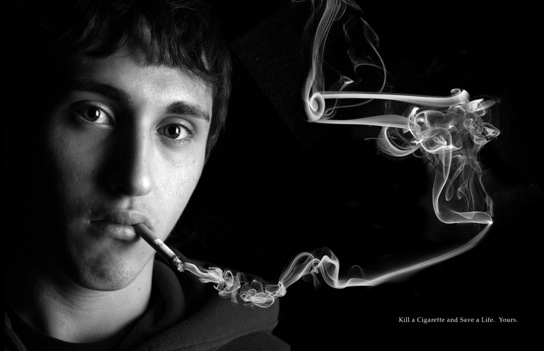
It’s surprisingly easy to imagine a society where gun ownership is looked down upon, if not scorned outright. This already happened with smoking, at least partly as a result of a public education campaign aimed at young people, and it happened when polite society finally came down against people flying the Confederate flag after the Charleston church shootings this year. Sometimes, when legislative action is difficult or downright impossible, a cultural approach works to curtail dangerous behaviors.
In short, we can make gun ownership uncool.
This was once unthinkable when it came to cigarettes. In post-World War II America, you might have kept an ashtray in your house even if you were a non-smoker, just to accommodate guests. It's hard to imagine anyone doing that today, or even to imagine a smoker with the audacity to ask if they can light up inside. ...
It's been hard for me to imagine that young people might think that equal rights for gay people would ever be the definition of a just society -- but that's how it is for Erudite Partner's undergrads. Sometimes extreme cultural change can precede legal change, and even obviate the need for legal change to some extent. We've all seen it.
Maiello has some practical suggestions re guns:
Let other parents know you don't want your kids staying over if they have unlocked guns.
Shun adults who take kids to gun ranges, as apparently the mothers of both the Sandy Hook and Oregon shooter did.
Remind them of the child who was taken to play with an Uzi and shot her instructor.
Point out that mature gun owners know when not to wave heat in the middle of a confusing melee -- including one young man at the recent Oregon massacre and another who witnessed the Gabby Giffords shooting. Owning a gun requires that kind of self-restraint.
Push for trigger locks that prevent unauthorized people from firing and for required liability insurance. Guns are dangerous business, not toys for fantasists. The only people who benefit from resisting safety features are owners of stock in gun manufacturers.
These sorts of measures can reduce the cool factor, if not for current gun owners, for the next generation of potential buyers.
***
Listening to D. Watkins, author of The Beast Side: Living (and Dying) While Black in America, interviewed on Fresh Air, I was reminded that, in addition to alienated rural white men, there is another set of people among us for whom the gun is a very present reality. For young men, usually of color, in neighborhoods where the drug trade thrives, guns just part of a precarious life. Here's Watkins describing how he came up:
... I had a friend - a really, really close friend - he's passed away now - but he was being bullied. He was being, you know, he was being picked on. He got beat down like three times by these same - by the same group of guys.
And these guys, they were notorious in East Baltimore. They used to roll around in packs of, like, 35 or 40. And they used to come through neighborhoods and, you know, I got beat up by them before. They used to beat us down. But, you know, my one particular friend, they beat him up, like, a couple of times - three or four times.
And the last time, he was just - you know, he couldn't take it anymore. He was frustrated. And we're, like, 12 and 13 years old around this time so one day - you know, we used to hang on this corner called Robinson Street - the corner of Robinson and Orleans Street - and we was outside, there was some girls outside, there was some people outside. And, you know, it was a regular summer night. We were having a good time. These guys bend the corner, you know, and they - so many of them. And they walking down the block, and, you know, they spot him, and they see him, and they walk up on him. And, you know, there was about 10 of us so, you know, we swelled up and just stood up. And it was like, you know, like, you know - you know, it's more of them than us but whatever, let's do this.
And, out of nowhere, you know, I - none of us expected this. We didn't even know he pulled a gun out. And he just started busting shots at the crowd. I, you know, well, he was behind me when he did it, so I felt, like, bullets pass right past my head. And, you know, I hit the deck. And he ended up shooting his cousin in the hand by mistake.
And those guys - those same guys - they didn't pick on him anymore. But that was our most, like, one of the worst situations for him because after he did that, you know, it was no looking back. He carried that gun like, you know, like that was his best friend. And it ended up being the way he died.
The gentrifying San Francisco Mission District is not immune to this sort of gun problem. We had a young man around our little church last year who was trying to leave the gang life, who was trying to make it by working a job ... and his former mates shot his girl friend dead next to him. It happens.
This kind of gun violence is not what organized gun owners and manufacturers are defending. But we have relatively good gun laws around here. Yet the thugs get the guns because there are all those other jurisdictions where rabid gun absolutists fight to make availability easy. Guns leak to where people want them.
Caging Black and brown people into neighborhoods where kids have to learn to avoid the guns -- that strikes me as the height of uncool.
In the Times, as he often does, Charles Blow explains why racial relations seem so white hot in Amerkkka these days.
According to the Census Bureau, “The U.S. is projected to become a majority-minority nation for the first time in 2043,” with minorities projected to be 57 percent of the population in 2060.
In response, fear and restrictive laws are creeping back into our culture and our politics — not always explicitly or violently, but in ways whose effects are similarly racially arrayed. Structural inequities — economic, educational — are becoming more rigid, and systemic biases harder to eradicate. But this time the threat isn’t regional and racially binary but national and multifaceted.
So, we must fight our fights anew.
This does go to the heart of our times. I know. I live in California. (And I write this post periodically, because it is still true and still matters.)
You see, in California in the 1990s, the state was very close to its own racial tipping point, reached in 2000. No "racial" group forms a majority here. And guess what? We're fine!
We were not fine in the 1990s. I wasn't just blowing smoke when I was running around telling funders they had to pay for voting rights and citizen participation projects in the state -- that we were becoming the new Alabama. During that decade, the shrinking white majority repeatedly tried to hold off demographic change by popular vote.
In 1994, we voted that we hated (Mexican-origin) immigrants and wouldn't provide those people education for their kids, health care, or other social services. (Fortunately, federal courts mostly said "no" to these attempts by the state to preempt national law and policy.) In 1996, we voted to outlaw efforts to ensure that all groups got a fair chance at public higher education; wouldn't want white prospective students to have to compete with those people. That ban on the affirmative action is still in place and diversity in the University of California system has not yet recovered. In 1998, we voted to ban multi-year bilingual education. Wouldn't want to coddle those people. Let'em speak English, even if they are kids and just arrived.
But demographic change marched on. And though those people are still a minority of the registered electorate, those people voted for Democrats near unanimously. And enough whites also voted for Democrats, so the California Republican Party became vestigial, annually searching for some way to "reinvent" itself. And now the state mostly tries to undo the damage from those years and stumble toward a sustainable future which is going to take the best efforts of all of us.
California is no paradise of racial harmony. Our police departments still kill young people of color with little pretext; they just killed an inoffensive Guatemalan immigrant in my neighborhood last week.
But we're over the hump on demographic change. People struggling to get there in the rest of the country should look to California and feel hope. Change is hard; there have been and will be more casualties. But change very well may not take as long as it looks as if it might from where we are stuck today.
***
Just one more irresistible moment from Selma. Diane Nash, along with James Bevel, organized the 1965 march. She believed in vigorous nonviolent action for freedom and justice then and she still believes in it now. Last Saturday, she didn't march with the dignitaries -- the participation of George W. Bush detracted too much from what she still holds dear.
... I was not happy there was not a seating section ... for the 'foot soldiers,' the people who actually crossed the bridge 50 years ago ... I think the Selma movement was about nonviolence, and peace, and democracy and George Bush stands for just the opposite, for violence and war and stolen elections. And George Bush's administration had people tortured.
... I think today should have been a celebration of nonviolence. ... it is definitely one of the most significant social inventions of the 20th century. ...